Ever brought home a gorgeous, leafy Calathea or a majestic Fiddle Leaf Fig, only to watch its vibrant leaves turn brown and crispy at the edges? It’s a plant parent’s nightmare. You’ve given it the right light, the perfect watering schedule, but something is still off. The culprit is often an invisible one: dry air. That’s where a humidifier comes in as your plant’s best friend. But simply owning one isn’t enough; knowing exactly How To Place A Humidifier For Plants is the real game-changer that transforms a struggling plant into a thriving, lush masterpiece.
Are your tropical beauties looking a little lackluster? Let’s dive in and create the perfect humid haven they’ve been dreaming of.
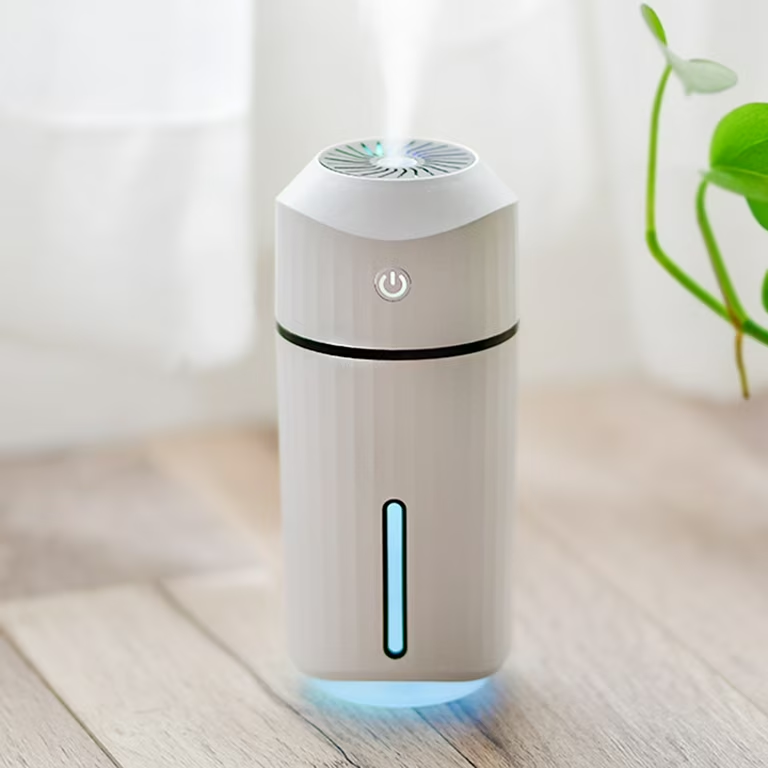
Why Placement is a Bigger Deal Than You Think
You might think, “I’ll just stick it in the corner and turn it on.” Hold on a second! Humidifier placement isn’t just about turning it on; it’s about strategic positioning. Think of it like setting up a sound system. You wouldn’t just throw the speakers anywhere, right? You place them to create the perfect acoustic environment. It’s the same principle for creating the perfect moisture environment.
Proper placement ensures that:
- Mist is Evenly Distributed: The goal is to raise the relative humidity of the entire area around your plants, not just drench the one closest to the machine.
- Plants Get the Benefit, Not the Damage: Direct, heavy mist can lead to fungal issues or leaf rot. We want a gentle, spa-like atmosphere, not a rainstorm.
- Your Home Stays Safe: Water and electronics don’t mix. And constant moisture can damage wooden furniture, floors, and even walls over time.
Getting this right is the difference between a happy plant and a soggy, moldy mess.
The Golden Rules: How to Place a Humidifier for Plants
Ready to give your plants the five-star treatment? Follow these key principles for optimal humidifier placement, and your green companions will thank you with vibrant, new growth.
1. Elevate, Elevate, Elevate
This is the number one rule. Never place your humidifier directly on the floor. Cool mist is denser than warm air, meaning it will naturally fall. If your unit is on the floor, the moisture will simply pool on the ground, making your floor damp and failing to reach your plants’ leaves where it’s needed most.
- The Fix: Place your humidifier on a stool, a small table, or a shelf. Aim for it to be at least 2-3 feet off the ground. This elevation gives the mist a chance to disperse into the air and circulate effectively around the room.
2. Find the “Goldilocks” Zone: Not Too Close, Not Too Far
Placing a humidifier too close to your plants is a classic beginner mistake. You might think you’re giving them a direct blast of goodness, but you’re actually risking oversaturation. Leaves that stay constantly wet are a breeding ground for bacteria and fungal diseases.
- The Sweet Spot: A distance of 3 to 6 feet is generally ideal. This allows the fine mist to evaporate and raise the ambient humidity around the plant group without directly wetting the foliage.
- The Hand Test: If you’re unsure, place your hand where your nearest plant is. If your hand feels damp after a minute, the humidifier is too close. You want to feel a change in the air’s humidity, not feel wet.
3. Group Therapy: Create a Humid Microclimate
Most tropical plants, the ones that crave humidity the most, naturally grow close together on the forest floor. You can replicate this by grouping your humidity-loving plants together. Placing your humidifier near this group creates a wonderful “microclimate.”
- How it Works: The plants themselves release moisture through a process called transpiration. By grouping them, they help each other stay humid. Add a humidifier to the mix, and you’ve created a self-sustaining pocket of tropical paradise. This is far more efficient than trying to humidify an entire large room for just one or two plants.
4. Watch the Airflow
Pay attention to your home’s natural air currents. Placing a humidifier directly next to a heating vent, an air conditioner, or an open window is like trying to fill a bucket with a hole in it. The dry, moving air will simply whisk all that lovely moisture away before it can benefit your plants.
- Best Practice: Find a spot with minimal drafts. This will allow the humidity to build up naturally and remain stable in the area where your plants are located.
5. Protect Your Valuables
Remember, a humidifier’s job is to release water into the air. That means you need to be mindful of what’s around it.
- Keep it away from:
- Wooden Furniture & Floors: Constant moisture can cause wood to warp, swell, or stain. Use a waterproof mat underneath if you’re worried.
- Electronics: This one is a no-brainer. Keep your humidifier a safe distance from TVs, speakers, computers, and outlets.
- Books and Walls: Paper and drywall can absorb moisture, leading to damage or mold growth over time.
Choosing the Right Tool for the Job
Not all humidifiers are created equal, and the type you choose can influence placement. The two most common types for plant parents are ultrasonic and evaporative.
Bảng trống.| Feature | Ultrasonic Humidifier | Evaporative Humidifier | Best for Plants? |
|---|---|---|---|
| How it Works | Uses high-frequency vibrations to create a fine, visible cool mist. | A fan blows air over a wet wick filter, releasing invisible moisture. | Both are great! |
| Placement Note | The visible mist can leave a fine mineral deposit (“white dust”) on leaves and furniture if you use hard tap water. Place it where you can easily wipe surfaces down. Using distilled water solves this. | Self-regulating. It won’t over-humidify a room. The moisture is invisible, so there’s no white dust. | Evaporative is more “set it and forget it,” while ultrasonic provides that satisfying visible mist. |
| Noise Level | Very quiet, almost silent. | Can be noisier due to the internal fan. | Ultrasonic is ideal for bedrooms or quiet offices. |
“The goal is to replicate a plant’s native environment. For a fern from a misty forest floor, you want to create a gentle, consistent rise in ambient humidity, not a direct spray. Proper placement of your humidifier is what allows you to build that perfect, supportive microclimate.”
— Dr. Eleanor Vance, Plant Biologist and Indoor Air Quality Specialist
Common Mistakes to Avoid (We’ve All Made Them!)
Learning how to place a humidifier for plants also means knowing what not to do. Here are a few common pitfalls:
- Pointing the Nozzle Directly at a Plant: This is the #1 mistake. It can cause leaf spot, mold, and even rot. Always point the mist into the open air above or near the plants.
- Forgetting to Clean It: A dirty humidifier is a health hazard for both you and your plants. It can spew mold and bacteria into the air. Stick to a weekly cleaning schedule. For more tips, check out [our detailed guide to cleaning your humidifier].
- Using Hard Tap Water (in Ultrasonic Models): This causes that pesky white dust. While not necessarily harmful, it can clog the plant’s pores (stomata). If possible, use distilled or demineralized water.
- Letting it Run Dry: This can damage the unit’s motor. Many modern humidifiers have an auto-shutoff feature, which is a lifesaver.
Frequently Asked Questions (FAQ)
Q: What is the ideal humidity level for most houseplants?
A: For most tropical and subtropical houseplants (like Monsteras, Calatheas, and ferns), the ideal relative humidity is between 50% and 60%. Desert plants like cacti and succulents are happy with lower levels, around 30-40%. A small digital hygrometer is a great tool to monitor levels accurately.
Q: How long should I run a humidifier for my plants?
A: It depends on your home’s environment. In a very dry climate or during winter when the heat is on, you might run it for 8-12 hours a day. The best approach is to use a hygrometer and run the humidifier as needed to maintain that 50-60% target range. Some humidifiers have a built-in humidistat that does this for you automatically.
Q: Can I put my humidifier on the floor for my plants?
A: It’s strongly advised not to. Placing it on the floor concentrates the moisture on the ground, which can damage your flooring and is ineffective at raising the humidity around the plant’s leaves. Always elevate your humidifier by at least a few feet.
Q: How close should my plants be to the humidifier?
A: A safe and effective distance is generally between 3 and 6 feet. This is close enough for the plants to benefit from the increased humidity but far enough to prevent the leaves from getting directly wet from the mist.
Q: Does the size of my humidifier matter?
A: Absolutely. A small desktop humidifier will only be effective for a small grouping of plants right next to it. A larger console humidifier can raise the humidity in an entire room. Choose a size that is appropriate for the space and the number of plants you want to support.
The Takeaway: Create Your Indoor Oasis
Mastering how to place a humidifier for plants is less about rigid rules and more about thoughtful observation. It’s about understanding that you’re not just watering the roots; you’re nurturing the entire plant by curating its atmosphere.
By elevating your unit, finding that perfect distance, grouping your plants, and being mindful of airflow, you’re not just adding moisture to the air—you’re creating a thriving ecosystem. Your plants will reward your efforts with glossier leaves, stronger stems, and the kind of lush, vibrant growth that makes every plant parent proud. So go ahead, give your green friends the spa day they deserve.