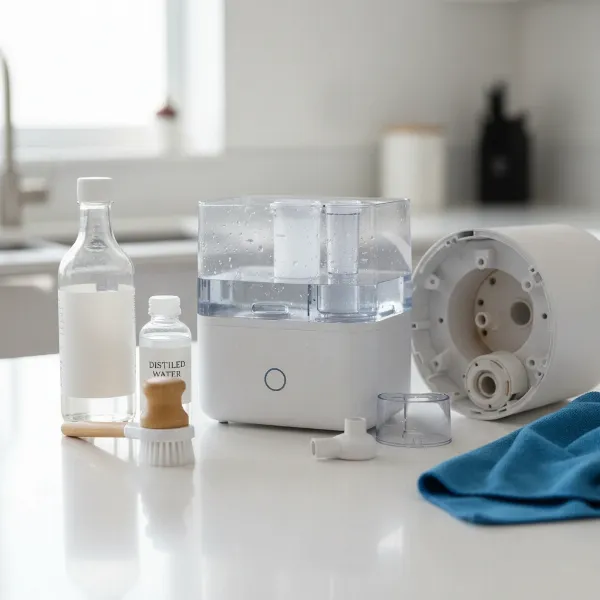
Humidifiers are wonderful devices, transforming dry, uncomfortable air into a pleasant, breathable environment in your home. They ease dry skin, soothe scratchy throats, and can even help reduce the spread of airborne viruses. Yet, these hardworking appliances, constantly interacting with water, can become breeding grounds for bacteria, mold, and stubborn mineral deposits if not properly maintained. A dirty humidifier, instead of helping, can actually release these contaminants back into the air you breathe.
Keeping your humidifier pristine isn’t just about aesthetics; it’s vital for your health and the device’s longevity. Fortunately, a common household item—hydrogen peroxide—offers an effective, natural way to disinfect and sanitize your humidifier, ensuring it delivers only clean, healthy mist.
Why a Clean Humidifier Matters for Your Health
Maintaining optimal indoor humidity, typically between 30% and 50%, is crucial for comfort and well-being. When humidity levels drop too low, you might experience dry skin, irritated nasal passages, sore throats, and static electricity. A well-maintained humidifier addresses these issues, creating a more comfortable living space.
However, the stagnant water and dark, moist interiors of a neglected humidifier are prime conditions for the growth of mold, mildew, and bacteria. These microorganisms can then be dispersed into your indoor air, potentially triggering allergies, respiratory problems, or other health concerns. Regular cleaning prevents these harmful invaders from compromising your air quality.
The Power of Hydrogen Peroxide for Humidifier Cleaning
Hydrogen peroxide (H2O2) is a natural disinfectant that many homeowners already have in their medicine cabinets. It’s an oxygen-based cleaner that effectively kills bacteria, mold, and viruses by breaking down their cellular structure through oxidation. Unlike harsh chemical cleaners, 3% hydrogen peroxide is generally considered safe for use in humidifiers when properly diluted and rinsed, leaving behind no harmful residues or strong odors. Its effervescent action can also help to loosen mineral buildup, making scrubbing easier.
Essential Safety Precautions Before You Start
Before you begin the cleaning process, remember that safety is paramount. Hydrogen peroxide, while mild, should still be handled with care.
- Always Unplug: Ensure your humidifier is completely unplugged from the power source before disassembling or cleaning any part. Water and electricity are a dangerous combination.
- Use 3% Hydrogen Peroxide: Standard drugstore hydrogen peroxide typically comes in a 3% concentration, which is suitable for this cleaning method. Do not use higher concentrations without proper dilution instructions, as they can be hazardous.
- Never Mix: It is critically important never to mix hydrogen peroxide with other cleaning agents like vinegar or bleach. Combining these can create toxic fumes that are extremely dangerous to inhale.
- Rinse Thoroughly: After cleaning, rinse all components meticulously to ensure no cleaning solution remains. Any residue could be dispersed into the air when the humidifier is in use.
- Protect Your Skin: While 3% hydrogen peroxide is relatively mild, wearing gloves can protect sensitive skin during the cleaning process.
Step-by-Step Guide: Cleaning Your Humidifier with Hydrogen Peroxide
Cleaning your humidifier with hydrogen peroxide is a straightforward process that ensures a hygienic and efficient device. Follow these steps for a sparkling clean humidifier.
Step 1: Disassemble and Empty
|
Our Picks for the Best Humidifier in 2026
As an Amazon Associate I earn from qualifying purchases.
|
||
| Num | Product | Action |
|---|---|---|
| 1 | DREO Humidifiers for Bedroom, 3L Top Fill 30H & 26dB Quiet Runtime for Large Room, Cool Mist Ultrasonic Humidifier with Humidity Sensor, Night Light for Home, Baby, Nursery, Plants, New Edition |

|
| 2 | Homvana Humidifiers for Bedroom Home, 3.6 L Cool Mist Top-Fill 34H Super Long Time, Quiet 23dB, Baby Humidifier, Oil Diffuser for Large Room, House, Plant, Nursery, Office, BPA FREE, Ultrasonic (Grey) |
|
| 3 | LEVOIT Humidifiers for Bedroom Home, Smart Warm and Cool Mist Air Humidifier for Large Room, Auto Customized Humidity, Fast Symptom Relief, Easy Top Fill, Essential Oil, Quiet, OasisMist4.5L, White |
|
| 4 | LEVOIT OasisMist 1000S (10L) Smart Humidifier for Home Large Room Bedroom, Last 100 Hours Suitable for Indoor Plant, Cover up to 600ft², Easy Top Fill, Remoter & Voice Control, Auto Mode, Quiet, White |
|
| 5 | LEVOIT Humidifiers for Bedroom Large Room Home, (6L) Cool Mist Top Fill Essential Oil Diffuser for Baby & Plants, Smart App & Voice Control, Rapid Humidification & Auto Mode - Quiet Sleep Mode, Gray |
|
| 6 | LEVOIT - Humidifiers for Bedroom - Quiet (3L Water Tank) - Cool Mist/Top Fill/Essential Oil Diffuser/25Watt - Home/Large Room - 360° Nozzle - Rapid Ultrasonic Humidification for Baby Nursery/Plant |
|
| 7 | LEVOIT Classic 160 Top-Fill Ultrasonic Cool Mist Humidifier, Super Easy to Fill and Clean, Quiet Operation for Bedroom Home Baby & Plants, Auto Shut-off for Safety, 360° Rotating Nozzle, 2.5L, Black |
|
| 8 | LEVOIT Top Fill Humidifiers for Bedroom, 2.5L Tank for Large Room, Easy to Fill & Clean, 28dB Quiet Cool Mist Air Humidifier for Home Baby Nursery & Plants, Auto Shut-off for Safety, 25H |
|
| 9 | Dreo Smart Humidifiers for Bedroom, Top Fill 4L Supersized Humidifier Large Room with 28 dB, 36H Runtime, Touch/APP/Voice Control, Nightlight, Cool Mist Humidifiers for Baby, Plants, Indoor, Black |
|
| 10 | Dreo Humidifiers for Bedroom, 4L Top Fill for Large Room, 36H Runtime, 28 dB Quiet Supersized Cool Mist Air Humidifier for Baby Nursery, Plants, Indoor, Night Light, Easy to Clean & Fill, White |
|
First, unplug your humidifier and carry it to a sink or bathtub. Carefully remove the water tank, base, and any other detachable components like trays, caps, or wicks. Empty any remaining water from the tank and base. Dispose of this old water, as it may contain contaminants.
Step 2: Prepare the Cleaning Solution
For most cleaning and disinfecting, a diluted hydrogen peroxide solution is effective. Mix one part 3% hydrogen peroxide with four parts water. For example, if you use one cup of hydrogen peroxide, add four cups of water to create your cleaning solution. This dilution helps sanitize without being overly harsh on your humidifier’s materials.
Step 3: Soak Components for Disinfection
Pour the prepared hydrogen peroxide solution into the water tank. Swish it around to coat the entire interior surface. If possible, immerse other smaller, removable parts (excluding electronic components or filters not meant to be soaked) into this solution or in a separate basin filled with the same mixture. Let all components soak for at least 20 to 30 minutes. This soaking time allows the hydrogen peroxide to effectively break down and kill bacteria, mold, and algae that may be present.
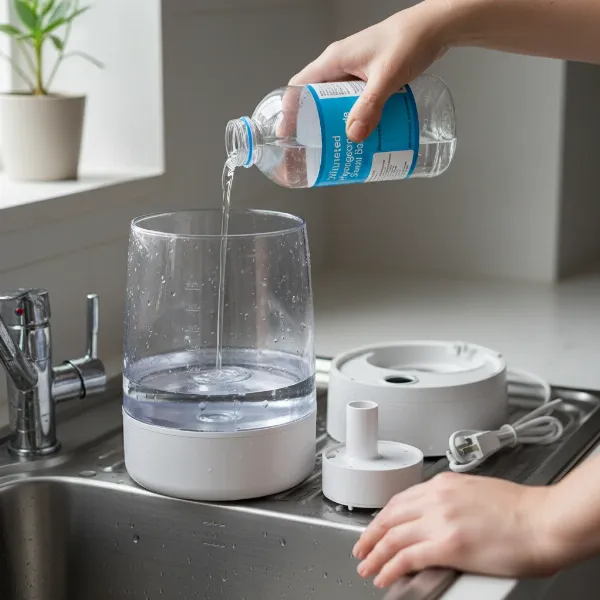 A person carefully pouring a hydrogen peroxide and water solution into a disassembled humidifier tank for cleaning.
Step 4: Scrub Away Residue
After soaking, empty the hydrogen peroxide solution. Use a soft-bristled brush (an old toothbrush works perfectly for tight spots and crevices) or a clean sponge to scrub the inside surfaces of the tank, the base, and any other treated components. Pay special attention to areas with visible mineral buildup, slimy film, or discoloration. The peroxide should have softened these deposits, making them easier to remove.
Step 5: Rinse Thoroughly – Multiple Times
This is a critical step. Rinse all cleaned components very thoroughly under cool, running water. Continue rinsing until you are absolutely certain no residue or scent of the hydrogen peroxide solution remains. You might need to rinse several times to ensure all traces are gone. Any leftover solution could become airborne when the humidifier is in use.
Step 6: Air Dry Completely and Reassemble
After rinsing, place all parts on a clean towel or drying rack and allow them to air dry completely. Ensuring everything is bone dry prevents immediate re-growth of mold or bacteria. Once fully dry, reassemble your humidifier. Now it’s ready to be filled with fresh, preferably distilled, water.
Maintaining Your Humidifier for Optimal Performance
Beyond a deep clean with hydrogen peroxide, regular maintenance habits will keep your humidifier running efficiently and safely. Consistent care means healthier air and a longer lifespan for your appliance.
- Change Water Daily: Never leave stagnant water in your humidifier. Empty and refill the tank with fresh water every day, even if it’s not completely empty. This simple step significantly reduces bacterial growth.
- Use Distilled Water: Tap water contains minerals that can lead to white dust (fine mineral particles dispersed into the air) and hard water buildup inside your machine. Distilled water is free of these minerals, preventing buildup and reducing the need for frequent descaling.
- Regular Cleaning: Aim for a quick clean with soap and water weekly, and a deep clean with hydrogen peroxide or vinegar (never both!) every two weeks to a month, depending on usage and water quality.
- Filter and Wick Care: If your humidifier has a filter or wick, follow the manufacturer’s instructions for cleaning or replacement. These parts often trap minerals and contaminants and are crucial for air quality.
> “A healthy humidifier is the foundation of a healthy indoor environment. Neglecting its cleanliness is like watering your plants with muddy water—it defeats the purpose.” – Admin, Humidifiert.com, Humidifier Specialist with 10+ years experience.
Conclusion
Cleaning your humidifier with hydrogen peroxide is an effective and accessible method to ensure you’re circulating clean, healthy moisture throughout your home. By following these clear, step-by-step instructions and adhering to crucial safety measures, you can prevent the growth of harmful bacteria and mold, extend the life of your appliance, and breathe easier. Prioritizing consistent maintenance and regular disinfection transforms your humidifier from a potential health hazard into a reliable ally for indoor air quality. Isn’t a fresh breath of clean air worth the effort?
Frequently Asked Questions
What concentration of hydrogen peroxide should I use for cleaning my humidifier?
Always use standard 3% hydrogen peroxide, which is readily available at most drugstores. Higher concentrations are not recommended for general household cleaning due to increased safety risks and potential damage to the appliance.
How often should I clean my humidifier with hydrogen peroxide?
For regular disinfection and to prevent mold and bacteria buildup, a deep clean with hydrogen peroxide is recommended every two to four weeks, depending on how frequently you use your humidifier and the water quality in your area. Daily water changes and weekly lighter cleaning are also advised.
Can I mix hydrogen peroxide with vinegar or bleach to clean my humidifier?
Absolutely not. It is extremely dangerous to mix hydrogen peroxide with vinegar or bleach. Combining these chemicals can produce toxic gases that are harmful if inhaled. Always use these cleaning agents separately and rinse thoroughly between uses.
Is it safe to inhale hydrogen peroxide from a humidifier if some residue remains?
While 3% hydrogen peroxide is generally considered safe when properly diluted and rinsed, it is crucial to rinse all humidifier components thoroughly to remove any residue. Inhaling concentrated hydrogen peroxide vapor can irritate the respiratory system. Ensuring a complete rinse minimizes any potential risk.
What if my humidifier has stubborn mineral buildup that hydrogen peroxide doesn’t remove?
Hydrogen peroxide is primarily a disinfectant. For heavy mineral buildup, white distilled vinegar is typically more effective as a descaler. You can use vinegar for descaling, then hydrogen peroxide for disinfecting, but always perform these steps separately and rinse all components thoroughly between the two solutions.