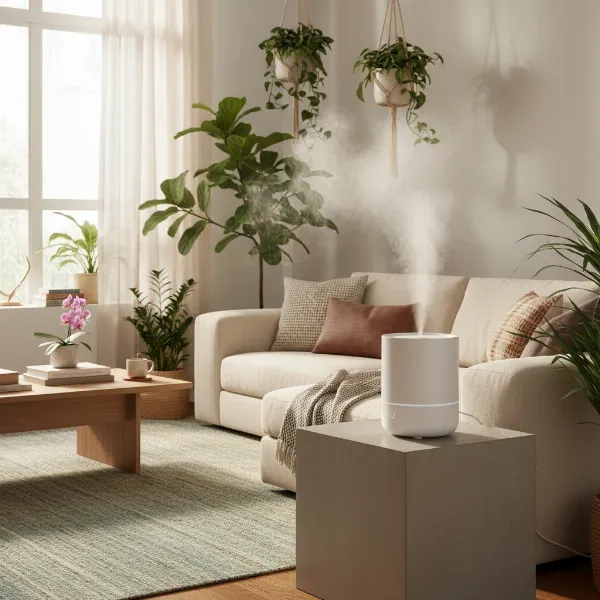
Humidifiers are indispensable allies in combating dry indoor air, offering relief from parched skin, irritated sinuses, and static electricity. Yet, this beneficial appliance can quickly turn into a silent threat if neglected. The very environment humidifiers create – a warm, moist water tank – is also an ideal breeding ground for mold, bacteria, and mineral deposits. If not regularly cleaned, these contaminants can be released into your home’s air, undermining the very health benefits you sought. As a technician with over a decade of experience in humidification, I understand the critical importance of proper maintenance. This comprehensive guide will walk you through simple, effective steps to ensure your humidifier remains a source of clean, healthy moisture, free from harmful pathogens.
Why a Dirty Humidifier Poses Health Risks
The primary function of a humidifier is to introduce moisture into the air, ideally maintaining indoor humidity levels between 30% and 50%. However, when water sits stagnant in the tank, it becomes a perfect habitat for microorganisms. Within days, biofilm, a slimy layer of bacteria and mold, can form on surfaces. These airborne contaminants, along with “white dust” from mineral deposits, are then propelled into your breathing space. Inhaling these particles can trigger or worsen respiratory issues, allergies, asthma, and even lead to a condition known as “humidifier lung,” a type of hypersensitivity pneumonitis. Regular cleaning is not just about appliance longevity; it’s a vital step in protecting your family’s health and ensuring the air you breathe is genuinely clean.
Gathering Your Cleaning Arsenal
Before you begin the cleaning process, ensure you have the right tools and cleaning agents on hand. Most of these items are likely already in your home, making humidifier maintenance both easy and affordable.
- White Vinegar: An acidic, natural descaler perfect for breaking down mineral deposits and mild disinfection.
- Chlorine Bleach (Optional): A powerful disinfectant for killing bacteria and mold. Use only if you prefer it over vinegar for disinfection and never mix it with vinegar.
- Soft Brush or Old Toothbrush: Essential for scrubbing away stubborn buildup in crevices.
- Microfiber Cloths or Lint-Free Towels: For drying and wiping surfaces.
- Distilled Water: For refilling your clean humidifier, significantly reducing future mineral and microbial buildup.
- Rubber Gloves: To protect your hands from cleaning solutions.
Crucial Warning: Never, under any circumstances, mix bleach and vinegar. Combining these two common household cleaners creates a toxic chlorine gas that can cause severe respiratory damage and even be fatal. Always choose one method for disinfection and rinse thoroughly before considering the other.
Step-by-Step: Deep Cleaning Your Humidifier
A thorough weekly cleaning is your best defense against mold and bacteria. Follow these steps meticulously for a sparkling clean and safe humidifier.
Preparation: Unplug, Empty, Disassemble
|
Our Picks for the Best Humidifier in 2026
As an Amazon Associate I earn from qualifying purchases.
|
||
| Num | Product | Action |
|---|---|---|
| 1 | Homvana Humidifiers for Bedroom Home, 3.6 L Cool Mist Top-Fill 34H Super Long Time, Quiet 23dB, Baby Humidifier, Oil Diffuser for Large Room, House, Plant, Nursery, Office, BPA FREE, Ultrasonic (Grey) |

|
| 2 | Dreo Humidifiers for Bedroom, 4L Top Fill for Large Room, 36H Runtime, 28 dB Quiet Supersized Cool Mist Air Humidifier for Baby Nursery, Plants, Indoor, Night Light, Easy to Clean & Fill, White |
|
| 3 | DREO Humidifiers for Bedroom, 3L Top Fill 30H & 26dB Quiet Runtime for Large Room, Cool Mist Ultrasonic Humidifier with Humidity Sensor, Night Light for Home, Baby, Nursery, Plants, New Edition |
|
| 4 | LEVOIT Classic 160 Top-Fill Ultrasonic Cool Mist Humidifier, Super Easy to Fill and Clean, Quiet Operation for Bedroom Home Baby & Plants, Auto Shut-off for Safety, 360° Rotating Nozzle, 2.5L, Black |
|
| 5 | LEVOIT Humidifiers for Bedroom Home, Smart Warm and Cool Mist Air Humidifier for Large Room, Auto Customized Humidity, Fast Symptom Relief, Easy Top Fill, Essential Oil, Quiet, OasisMist4.5L, White |
|
| 6 | LEVOIT Humidifiers for Bedroom Large Room Home, (6L) Cool Mist Top Fill Essential Oil Diffuser for Baby & Plants, Smart App & Voice Control, Rapid Humidification & Auto Mode - Quiet Sleep Mode, Gray |
|
| 7 | LEVOIT Top Fill Humidifiers for Bedroom, 2.5L Tank for Large Room, Easy to Fill & Clean, 28dB Quiet Cool Mist Air Humidifier for Home Baby Nursery & Plants, Auto Shut-off for Safety, 25H |
|
| 8 | LEVOIT - Humidifiers for Bedroom - Quiet (3L Water Tank) - Cool Mist/Top Fill/Essential Oil Diffuser/25Watt - Home/Large Room - 360° Nozzle - Rapid Ultrasonic Humidification for Baby Nursery/Plant |
|
| 9 | LEVOIT OasisMist 1000S (10L) Smart Humidifier for Home Large Room Bedroom, Last 100 Hours Suitable for Indoor Plant, Cover up to 600ft², Easy Top Fill, Remoter & Voice Control, Auto Mode, Quiet, White |
|
| 10 | Dreo Smart Humidifiers for Bedroom, Top Fill 4L Supersized Humidifier Large Room with 28 dB, 36H Runtime, Touch/APP/Voice Control, Nightlight, Cool Mist Humidifiers for Baby, Plants, Indoor, Black |
|
Safety is paramount. Always begin by unplugging your humidifier from the power outlet. Next, carefully empty any remaining water from both the tank and the base. Stagnant water is the culprit for contamination, so ensure it’s completely discarded. Finally, disassemble all removable parts such as the water tank, base, caps, and any trays or covers, separating them for individual cleaning.
Descaling with White Vinegar
White vinegar is excellent for breaking down mineral deposits, often seen as white, crusty buildup.
- For the Tank: Pour 1 to 2 cups of undiluted white vinegar into the water tank. Swish it around vigorously to coat the entire interior surface. If your tank has a wide opening, you can also fill it halfway with a 1:1 mixture of water and vinegar.
- For the Base: Fill the humidifier’s base (where the water usually sits during operation) with a solution of 1 part white vinegar and 1 part water.
- Soak: Allow the vinegar solution to sit in both the tank and the base for at least 30 minutes, or up to an hour for heavy buildup. This gives the vinegar time to dissolve the mineral deposits.
- Scrub: After soaking, use your soft brush or old toothbrush to scrub away any loosened mineral deposits or slimy film from all surfaces, paying special attention to hard-to-reach areas and the heating element if applicable.
- Rinse: Empty the vinegar solution and rinse all components thoroughly under cool, running fresh water. Ensure no vinegar odor remains before proceeding.
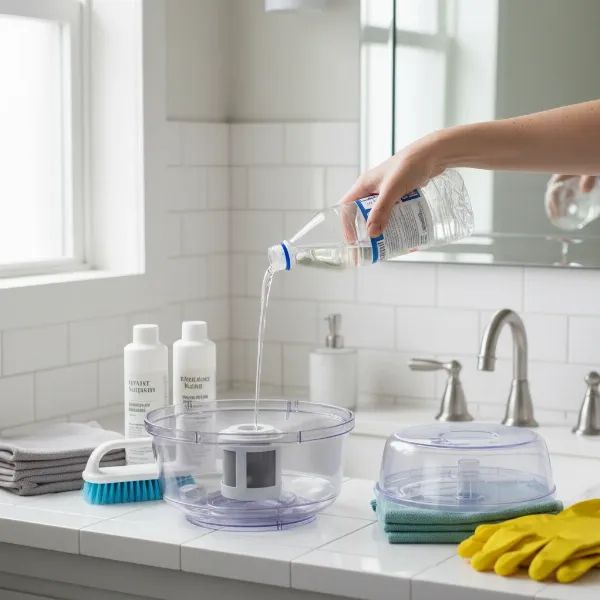 Cleaning humidifier with vinegar to remove mineral buildup
Disinfecting Against Mold and Bacteria
After descaling, disinfecting kills any remaining mold and bacteria. Remember the cardinal rule: never mix bleach and vinegar. Choose one of the following methods:
Option 1: Bleach Solution
- Prepare Solution: Mix 1 teaspoon of liquid chlorine bleach with 1 gallon of fresh water.
- Disinfect Tank: Pour the bleach solution into the water tank, swishing to coat all surfaces.
- Disinfect Base: Place the tank back onto the base (if it allows the solution to drain into the reservoir) or pour the bleach solution directly into the base. Ensure all water-contacting parts are submerged.
- Soak: Let the solution sit for 15-20 minutes to effectively kill bacteria and mold.
- Rinse Extensively: This is the most crucial step. Empty the bleach solution and rinse all parts repeatedly with fresh, clean water until the smell of bleach is completely gone. Any residual bleach can be aerosolized into the air during operation.
Option 2: Hydrogen Peroxide (Alternative)
If you prefer not to use bleach, a 3% hydrogen peroxide solution can be an effective alternative. Fill the tank and base with a 1:1 mixture of 3% hydrogen peroxide and water. Let it soak for 30 minutes, then rinse thoroughly multiple times with fresh water.
Rinsing and Drying Thoroughly
After disinfection, a meticulous rinse is non-negotiable to remove all chemical residues. Rinse each component several times under cool, running water until you can no longer detect any scent of vinegar or bleach. Once rinsed, allow all parts to air dry completely before reassembling. Air drying helps prevent any immediate re-growth of moisture-loving microbes. Using a clean microfiber cloth can speed up the drying process for external surfaces.
Daily Habits for a Healthier Humidifier
While a weekly deep clean is essential, daily habits significantly contribute to preventing rapid mold and bacterial growth.
- Change Water Daily: Even if your humidifier tank isn’t empty, always discard any leftover water and refill with fresh water. Stagnant water is the primary culprit for microbial growth.
- Rinse Tank and Base Daily: A quick rinse with fresh water before refilling helps remove any nascent film or deposits.
- Always Use Distilled Water: Tap water contains minerals that contribute to “white dust” and can accelerate scale buildup. These minerals also provide nutrients for bacteria. Distilled water, free from impurities, drastically reduces mineral deposits and inhibits microbial growth, leading to cleaner mist and less frequent deep cleaning.
Maintaining Your Humidifier’s Longevity
Beyond cleaning, a few additional practices can extend your humidifier’s lifespan and ensure it operates efficiently and safely.
Filter Care and Replacement
Many humidifiers, especially evaporative types, use wicking filters. These filters can collect minerals and become a breeding ground for mold and bacteria.
- Replace Regularly: Always follow your manufacturer’s recommendations for filter replacement, typically every 30 to 60 days. A discolored, hardened, or smelly filter needs immediate replacement.
- Never Clean with Chemicals: Do not attempt to clean filters with vinegar, bleach, or other chemicals, as they can damage the filter material and release harmful fumes when the humidifier is operating.
- Consider Filter Condition: Even with distilled water, filters will eventually need replacing. Monitor them for signs of wear, buildup, or odor.
Seasonal Storage
When you’re done using your humidifier for the season, a thorough cleaning before storage is vital. Follow all the deep cleaning steps, ensuring every component is perfectly dry before reassembling. Store the unit in a cool, dry place to prevent mold and mildew from forming during its downtime.
Know Your Humidifier: Always Consult the Manual
While the general cleaning principles apply to most portable humidifiers (ultrasonic, evaporative, warm mist, cool mist), specific models may have unique parts or recommended cleaning procedures. Always refer to your owner’s manual for detailed, model-specific instructions, as it’s the ultimate authority on maintaining your particular unit. This ensures you clean it safely and effectively without damaging any internal components.
Conclusion
A humidifier is a valuable appliance for enhancing your indoor comfort and health, but its benefits are only realized when it is kept meticulously clean. By making a habit of daily rinsing, weekly deep cleaning with vinegar for descaling, and proper disinfection (using either bleach or hydrogen peroxide, but never both), you can effectively prevent the growth of mold and bacteria. Coupled with the simple practice of using distilled water and regularly replacing filters, these steps ensure that your humidifier consistently disperses clean, healthy moisture into your home. Don’t let a helpful device become a hidden health hazard. Make humidifier cleaning a consistent part of your home maintenance routine – your health will thank you. What steps will you take today to ensure your humidifier is a true breath of fresh air?
Frequently Asked Questions
How often should I clean my humidifier?
For optimal health and performance, rinse and refill your humidifier daily with fresh, distilled water. Perform a thorough deep clean, including descaling and disinfecting, at least once a week while the unit is in use.
Can I use tap water in my humidifier?
While you can, it’s highly recommended to use distilled water. Tap water contains minerals that lead to “white dust” and mineral buildup (scale), which can clog the unit, reduce efficiency, and provide nutrients for bacteria and mold to grow faster.
What are the signs of a dirty humidifier?
Common signs include a musty or foul odor coming from the mist, visible slime or discolored buildup (black, pink, or green) inside the tank or on the base, or a reduction in mist output despite the unit being on.
Is it safe to use bleach to clean my humidifier?
Yes, using a highly diluted chlorine bleach solution (typically 1 teaspoon per gallon of water) is an effective disinfectant for killing mold and bacteria in your humidifier. However, it is absolutely critical to rinse all components extensively with fresh water until no bleach odor remains before reassembling and using the unit. Never mix bleach with vinegar.
Can I clean my humidifier filter?
Generally, no. Most humidifier filters are designed to be replaced, not cleaned, especially if they show signs of mold, hardening, or a foul odor. Attempting to clean them with chemicals can damage the filter and release harmful substances into the air when the humidifier runs. Always follow the manufacturer’s guidelines for filter replacement.