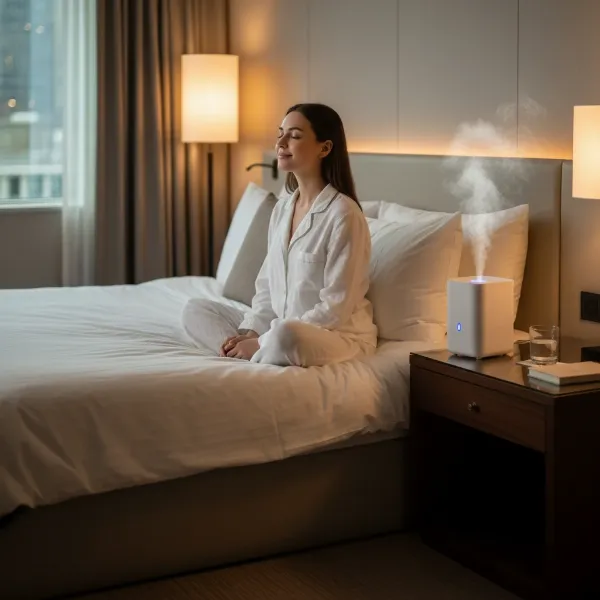
Many of us have a love-hate relationship with humidifiers. We crave the relief they offer for dry skin, congested sinuses, and irritated throats, especially during arid seasons. Yet, the persistent dread of discovering pink slime or black mold lurking within these devices often overshadows their benefits, turning a simple health solution into a frustrating cleaning chore. Enter the Canopy Humidifier, a product that boldly claims to be a game-changer with its “mold-free” promise and effortless maintenance. But in a market saturated with lofty claims, does the Canopy truly deliver on its revolutionary pledge, or is it just another humidifier destined for the dreaded moldy fate?
Why Humidity Matters: The Unseen Impact of Dry Air
Humidity plays a critical role in our health and comfort, often more than we realize. Optimal indoor humidity levels, typically between 40-60%, are essential for overall well-being. When the air in our homes becomes too dry, it can lead to a cascade of uncomfortable and even unhealthy issues.
Dry air can irritate respiratory passages, making us more susceptible to colds, flu, and allergies. Our skin can become parched, leading to dryness, itchiness, and exacerbated conditions like eczema. Beyond personal health, dry environments can also damage wooden furniture, houseplants, and even musical instruments. Introducing moisture into the air with a humidifier can alleviate these problems, promoting better sleep, healthier skin, and a more comfortable living space. However, traditional humidifiers, particularly those that produce visible mist or steam, often create ideal breeding grounds for mold and bacteria, ironically compromising the very air quality they are meant to improve.
Demystifying Humidifier Types: Evaporative vs. Ultrasonic
To understand what sets the Canopy Humidifier apart, it’s helpful to briefly review the main types of humidifiers available today.
- Ultrasonic Humidifiers use high-frequency vibrations to produce a cool mist. While often quiet and visually appealing, this mist can sometimes carry mineral dust (known as “white dust”) into the air if tap water is used, potentially irritating lungs. More significantly, the cool, damp environment within the tank is highly conducive to mold and bacterial growth if not cleaned diligently.
- Warm Mist Humidifiers boil water to release a warm, clean vapor. They can be comforting for cold symptoms, but the boiling element can be a burn hazard, and mineral deposits can still build up, requiring regular descaling.
- Evaporative Humidifiers, like the Canopy, use a fan to draw air through a saturated wick filter. This process disperses invisible moisture into the air, much like how clothes dry on a line. This “no-mist” technology is key to preventing condensation, white dust, and, crucially, significantly reducing the conditions for mold growth.
The Canopy Humidifier falls into the evaporative category but elevates the technology with specific design choices aimed at maximizing hygiene and user convenience.
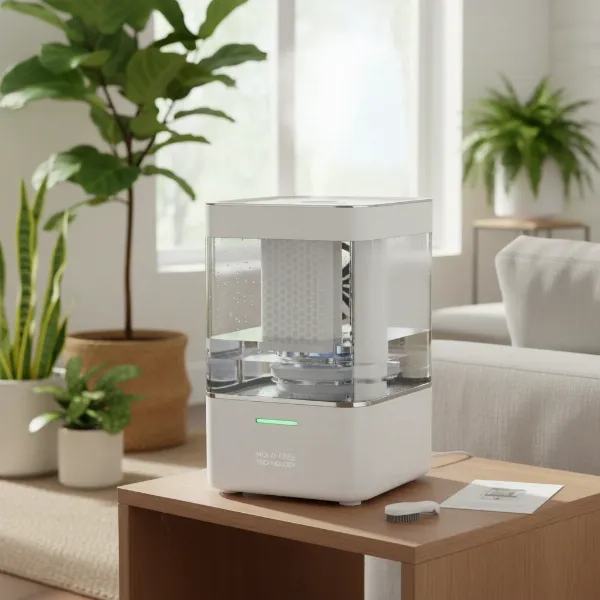 A Canopy humidifier showcasing its sleek design and key features for mold prevention and ease of use, against a backdrop of healthy plants and fresh air.
The Canopy Humidifier: A Deep Dive into its “Mold-Free” Claims
Canopy positions itself as a revolutionary solution to the long-standing problem of mold in humidifiers. Its design incorporates several innovative features to deliver on this promise:
Evaporative Technology: The Foundation of Clean Air
|
Our Picks for the Best Humidifier in 2026
As an Amazon Associate I earn from qualifying purchases.
|
||
| Num | Product | Action |
|---|---|---|
| 1 | LEVOIT Classic 160 Top-Fill Ultrasonic Cool Mist Humidifier, Super Easy to Fill and Clean, Quiet Operation for Bedroom Home Baby & Plants, Auto Shut-off for Safety, 360° Rotating Nozzle, 2.5L, Black |

|
| 2 | LEVOIT Top Fill Humidifiers for Bedroom, 2.5L Tank for Large Room, Easy to Fill & Clean, 28dB Quiet Cool Mist Air Humidifier for Home Baby Nursery & Plants, Auto Shut-off for Safety, 25H |
|
| 3 | LEVOIT Humidifiers for Bedroom Large Room Home, (6L) Cool Mist Top Fill Essential Oil Diffuser for Baby & Plants, Smart App & Voice Control, Rapid Humidification & Auto Mode - Quiet Sleep Mode, Gray |
|
| 4 | LEVOIT OasisMist 1000S (10L) Smart Humidifier for Home Large Room Bedroom, Last 100 Hours Suitable for Indoor Plant, Cover up to 600ft², Easy Top Fill, Remoter & Voice Control, Auto Mode, Quiet, White |
|
| 5 | LEVOIT - Humidifiers for Bedroom - Quiet (3L Water Tank) - Cool Mist/Top Fill/Essential Oil Diffuser/25Watt - Home/Large Room - 360° Nozzle - Rapid Ultrasonic Humidification for Baby Nursery/Plant |
|
| 6 | Dreo Smart Humidifiers for Bedroom, Top Fill 4L Supersized Humidifier Large Room with 28 dB, 36H Runtime, Touch/APP/Voice Control, Nightlight, Cool Mist Humidifiers for Baby, Plants, Indoor, Black |
|
| 7 | Homvana Humidifiers for Bedroom Home, 3.6 L Cool Mist Top-Fill 34H Super Long Time, Quiet 23dB, Baby Humidifier, Oil Diffuser for Large Room, House, Plant, Nursery, Office, BPA FREE, Ultrasonic (Grey) |
|
| 8 | Dreo Humidifiers for Bedroom, 4L Top Fill for Large Room, 36H Runtime, 28 dB Quiet Supersized Cool Mist Air Humidifier for Baby Nursery, Plants, Indoor, Night Light, Easy to Clean & Fill, White |
|
| 9 | DREO Humidifiers for Bedroom, 3L Top Fill 30H & 26dB Quiet Runtime for Large Room, Cool Mist Ultrasonic Humidifier with Humidity Sensor, Night Light for Home, Baby, Nursery, Plants, New Edition |
|
| 10 | LEVOIT Humidifiers for Bedroom Home, Smart Warm and Cool Mist Air Humidifier for Large Room, Auto Customized Humidity, Fast Symptom Relief, Easy Top Fill, Essential Oil, Quiet, OasisMist4.5L, White |
|
Unlike mist-producing humidifiers, the Canopy uses evaporative technology, releasing an invisible, clean moisture that doesn’t create condensation. This fundamental difference is critical in preventing mold, as mold thrives in stagnant water and visible moisture. By avoiding a damp environment around the unit, Canopy minimizes the conditions that typically lead to mold proliferation.
Disposable Paper Filters: A Game-Changer for Hygiene
Canopy’s secret weapon against mold is its disposable paper filter. Traditional wicks can quickly become breeding grounds for bacteria and mold. Canopy’s paper filters, which are recommended for replacement every 45 days, capture dissolved metals, minerals, dust from water, and airborne particles before they can be released into the air. This regular replacement schedule ensures that mold doesn’t have the chance to establish itself within the filter, maintaining a consistently clean output.
UV Light Purification: An Extra Layer of Defense
Further enhancing its hygiene credentials, the Canopy Humidifier features a built-in UV light. This UV light actively eliminates up to 99.9% of bacteria, mold, and viruses present in the tap water before the water is dispersed into the air. This purification step ensures that only clean, healthy moisture is added to your environment, addressing concerns about water quality even when using regular tap water.
Smart Persistent Airflow (SPA) Technology: Drying Out the Problem
One of the most innovative aspects of Canopy’s design is its Smart Persistent Airflow (SPA) technology. This system continues to run the fan until the unit is completely dry, preventing any standing water from lingering in the reservoir or on internal components. By eliminating residual moisture, the SPA technology actively inhibits mold growth and ensures the humidifier remains fresh and clean between uses.
Dishwasher-Safe Components: Simplifying Maintenance
Canopy significantly simplifies the cleaning process by making most of its components—including the water tank and tray—top-rack dishwasher safe. This feature is a major departure from traditional humidifiers, which often require tedious manual scrubbing of hard-to-reach crevices where mold loves to hide. The ability to simply pop parts into the dishwasher transforms humidifier maintenance from a dreaded chore into a hassle-free routine. This practical design choice strongly supports Canopy’s “mold-free” claim by making consistent, thorough cleaning accessible for all users.
Antimicrobial Materials: Built-in Resistance
Beyond its active technologies, Canopy also utilizes UV-resistant, antimicrobial plastics in its construction. These materials are chosen for their inherent ability to resist bacterial growth, featuring smooth, non-porous surfaces that leave no textured areas for microbes to cling to. This thoughtful material selection contributes to the humidifier’s long-term hygiene and durability.
Comparison Table: Canopy vs. Common Humidifier Types
| Feature | Canopy Humidifier (Evaporative) | Ultrasonic Humidifier | Warm Mist Humidifier |
|---|---|---|---|
| Mold Risk | Low (with maintenance) | High (especially if not cleaned) | Medium (mineral build-up) |
| Cleaning Ease | High (dishwasher safe parts) | Low (requires frequent scrubbing) | Medium (descaling needed) |
| Mist Output | Invisible cool moisture | Visible cool mist (can leave white dust) | Visible warm mist (steam) |
| Filter Type | Disposable paper filter (replaces ~45 days) | Optional demineralization filter | Optional (for mineral filtration) |
| Tap Water Use | Yes (with filtration/UV) | Distilled water often recommended | Yes (can lead to mineral build-up) |
| Noise Level | Whisper-quiet | Quiet (some subtle buzzing) | Boiling sound (can be noisy) |
| Safety | Low risk | Low risk (no heat) | Burn hazard (hot steam, boiling water) |
The Real-World Experience: Is It Really Mold-Free?
The Canopy Humidifier’s innovative design and multi-layered approach to mold prevention have garnered significant positive feedback. Many users, who previously struggled with moldy humidifiers, report a genuinely cleaner experience. “I’ve tried every humidifier on the market,” shares Ciara Deanne, a product reviewer, “and every single one claimed to be ‘easy to clean’ and ‘mold-free,’ and every single one failed. So when Canopy launched, I was skeptical but curious. It exceeded every expectation.” This sentiment is echoed across numerous reviews, with users appreciating the lack of visible mold and the simplified cleaning process [1, search result 1 for ‘Canopy Humidifier Review: Is It Really Mold-Free?’].
However, it’s important to approach any “mold-free” claim with a realistic perspective. While Canopy dramatically reduces the risk and makes maintenance easier, it doesn’t eliminate the need for any cleaning or filter replacement. A dedicated user on Reddit reported finding mold underneath the fan blades after unscrewing them, an area not typically part of the recommended cleaning routine [4, search result 2 for ‘Canopy humidifier independent reviews mold’]. This highlights a crucial point: any appliance that uses water will always require some level of attention. Canopy’s design makes that attention significantly less burdensome, but not entirely obsolete. The Smart Persistent Airflow technology helps dry the unit, but regular emptying of standing water and adhering to the filter replacement schedule are still crucial for optimal performance and hygiene.
> “While no humidifier can be truly ‘never-clean,’ Canopy has engineered a system that minimizes mold risk through a combination of smart airflow, advanced filtration, and user-friendly, dishwasher-safe components. It’s about making hygiene accessible, not ignoring it entirely.” – Dr. Emily R. Carter, Environmental Health Specialist
Your Guide to Buying a Humidifier: Considering Canopy
When deciding if the Canopy Humidifier is right for you, consider these factors:
- Your Priority on Hygiene: If avoiding mold and easy cleaning are your top concerns, Canopy’s design strongly aligns with these needs.
- Maintenance Commitment: While easier to clean, it still requires filter replacement (every 45 days) and occasional washing of its dishwasher-safe parts. Factor in the cost and effort of these consumables.
- Room Size: Canopy offers different models (e.g., Bedside, Large Room) designed for various room sizes. Ensure you select the appropriate model for your space to achieve effective humidification.
- Budget: Canopy humidifiers are often positioned as a premium product. Weigh the initial investment against the long-term benefits of reduced cleaning hassle and improved air quality compared to cheaper, more maintenance-intensive alternatives.
- Additional Features: Consider if features like the aroma diffuser or quiet operation are important to your daily routine.
Cleaning and Maintaining Your Canopy Humidifier
While the Canopy Humidifier boasts advanced mold-prevention technology, proper cleaning and maintenance remain vital to ensure its longevity and optimal performance. Neglecting these steps, even with a Canopy, can compromise its effectiveness.
- Regular Filter Replacement: The disposable paper filter is a cornerstone of Canopy’s hygiene system. It’s recommended to replace the filter every 45 days. Ignoring this can lead to diminished performance and potentially unpleasant odors as the filter becomes saturated and clogged. Canopy offers a convenient subscription service to ensure you always have fresh filters on hand.
- Dishwasher Cleaning: Take full advantage of the dishwasher-safe components. The water tank and tray can be placed on the top rack of your dishwasher for a thorough and effortless cleaning. For the parts that aren’t dishwasher safe (like the fan unit), a simple wipe-down with a damp cloth is usually sufficient.
- Empty Standing Water: Although the Smart Persistent Airflow (SPA) technology works to dry out the unit, it’s a good practice to empty any residual water from the reservoir if you plan to turn off the humidifier for an extended period. This further minimizes any chance of moisture lingering.
- Wipe Down Surfaces: Periodically wipe down the exterior and easily accessible interior surfaces. This helps prevent dust and grime buildup, which can affect the unit’s efficiency and appearance. While mold inside the main water path is largely inhibited, external dust can still accumulate.
- Address Fan Area: Based on some user reports, if you notice any unusual smells or are exceptionally diligent, consider a deeper clean of the fan area. This might involve carefully following manufacturer instructions (if provided) to access and clean components not typically covered by routine dishwasher cleaning. However, for most users following the standard guidance, the dishwasher-safe parts and filter replacement regimen will suffice.
Conclusion
The Canopy Humidifier has genuinely disrupted the humidifier market by addressing the pervasive issue of mold and cumbersome cleaning head-on. Through its innovative evaporative technology, disposable paper filters, UV light purification, Smart Persistent Airflow, and dishwasher-safe components, Canopy offers a significantly cleaner and more user-friendly humidifying experience. While no humidifier can be entirely “set-it-and-forget-it” when it comes to hygiene, Canopy dramatically lowers the maintenance burden and effectively combats mold where traditional units often fail. For those weary of scrubbing and concerned about air quality, the Canopy Humidifier presents a compelling, albeit premium, solution that largely lives up to its “mold-free” promises. Is the peace of mind and simplified maintenance worth the investment for a truly healthier home environment?
Frequently Asked Questions
What makes the Canopy Humidifier different from other “mold-free” claims?
Canopy distinguishes itself through a multi-faceted approach: it uses no-mist evaporative technology to prevent condensation, disposable paper filters that are regularly replaced, integrated UV light to purify water, and Smart Persistent Airflow to dry the unit completely, all while making major components dishwasher-safe for easy, thorough cleaning.
Can I really use tap water in my Canopy Humidifier?
Yes, the Canopy Humidifier is designed to be tap water friendly. Its advanced filtration system, including the disposable paper filter and UV light, effectively removes minerals, bacteria, and mold from tap water, eliminating the need for costly distilled water.
How often do I need to clean my Canopy Humidifier?
While many parts are dishwasher safe, it’s recommended to regularly clean the dishwasher-safe components (water tank, tray) and replace the paper filter every 45 days for optimal performance and to ensure continuous mold prevention.
Does the Canopy Humidifier produce white dust?
No, because the Canopy Humidifier uses evaporative technology, it does not produce the fine white mineral dust often associated with ultrasonic humidifiers that use tap water. The filter traps minerals before they can be dispersed into the air.
Is the Canopy Humidifier quiet enough for a bedroom?
Yes, the Canopy Humidifier is designed for whisper-quiet operation. Its evaporative technology and optimized airflow mean it operates silently without the buzzing or boiling sounds that can accompany other humidifier types, making it ideal for bedrooms and nurseries.