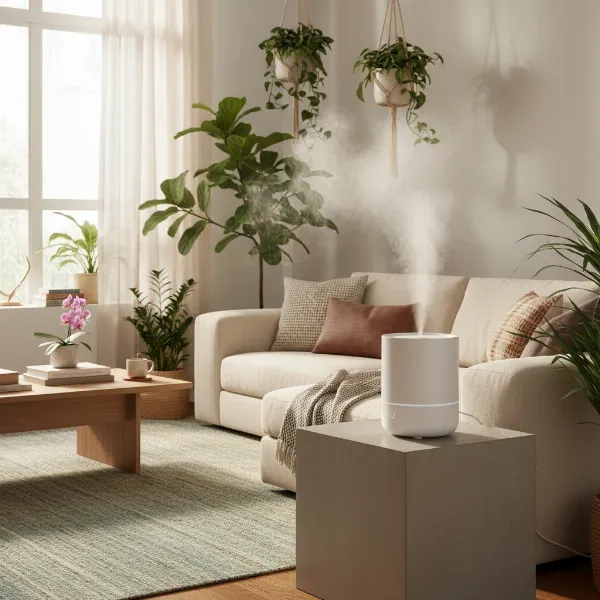
Are you tired of those annoying static shocks, the way your hair stands on end, or the clingy feeling of clothes during dry seasons? Many homeowners experience increased static electricity, especially in winter, and the culprit often points to one thing: low indoor humidity. While static can be a nuisance, a simple yet effective solution might be right under your nose.
This comprehensive guide will explore the fascinating link between humidity and static electricity, revealing how a humidifier can be your most powerful ally in maintaining a comfortable, static-free home environment. We’ll delve into the science of why dry air causes static, pinpoint the ideal humidity levels for prevention, help you choose the right humidifier, and offer additional tips to banish those shocking surprises for good.
Understanding Static Electricity and Its Dry Air Connection
Static electricity is a common phenomenon resulting from an imbalance of electric charges on the surface of objects. When two materials rub together, electrons can transfer from one object to another, creating a positive charge on one and a negative charge on the other. This charge imbalance builds up until it finds a path to release, often through a sudden, startling “shock” when you touch a conductor like a doorknob or another person.
So, why does this happen more in dry air? Air moisture acts as a natural conductor. In humid environments, water molecules in the air readily bind to these excess electrical charges, allowing them to dissipate safely and continuously. However, when the air is dry, there are fewer water molecules available to “ground” or carry away these charges, leading to a significant buildup on surfaces and your body. This is why static electricity problems are particularly prevalent in colder months when heating systems dry out indoor air.
Common static problems at home include everything from getting zapped by doorknobs and light switches to clothes clinging awkwardly, pet fur standing up, and even sensitive electronics experiencing minor disruptions or damage.
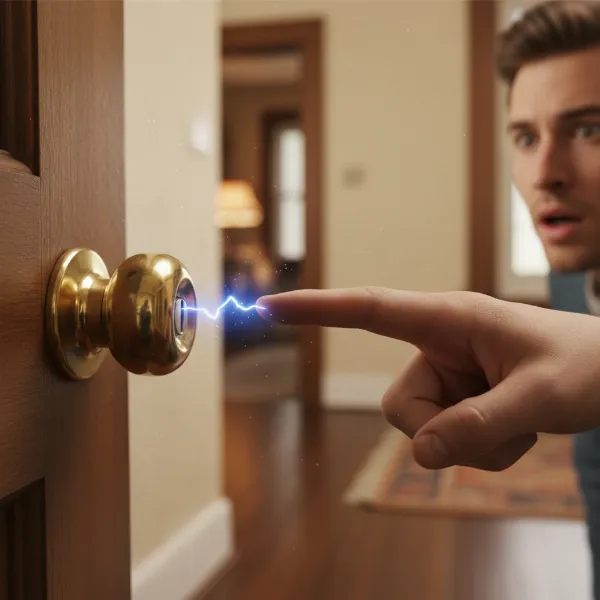 Person experiencing static shock from doorknob in dry home environment
The Science Behind Humidifiers and Static Reduction
The principle behind a humidifier’s effectiveness against static electricity is straightforward: it introduces moisture into the air. As the relative humidity increases, the air becomes a better electrical conductor.
Here’s a closer look at the mechanism:
- Natural Conductor: Water molecules, even in vapor form, can act as tiny pathways for electrical charges. When the air is moist, these molecules surround charged surfaces, providing an easy route for excess electrons to dissipate or transfer, neutralizing the charge. [cite: 2 (search 1), 2, 3, 4 (search 2)]
- Preventing Buildup: Instead of charges accumulating on objects and your body, the increased air conductivity created by a humidifier allows them to continuously leak away. This prevents the large charge imbalances that lead to sudden static discharges.
- Surface Conductivity: Moist air can also deposit a thin, invisible layer of water on surfaces. This film enhances the surface conductivity of materials that would otherwise be insulators, further helping static charges to disperse. [cite: 1, 5 (search 2)]
By consistently maintaining optimal humidity levels, a humidifier doesn’t just treat the symptoms of static; it tackles the root cause, creating an environment where static charges are far less likely to form and accumulate.
Finding Your Home’s Static-Free Sweet Spot: Ideal Humidity Levels
To effectively combat static electricity while maintaining a healthy indoor environment, the goal is to achieve a balanced relative humidity (RH). Experts generally recommend keeping your indoor relative humidity between 40% and 60%. [cite: 3, 4, 5 (search 1), 1, 2, 3, 4, 5 (search 3)]
- Why 40-60%? This range is considered ideal because it provides enough moisture to conduct static charges away effectively without introducing other problems. At levels below 40%, static electricity becomes much more prevalent. [cite: 3, 5 (search 1), 1, 3, 4 (search 3)] Some sources even suggest that levels above 55% RH can virtually eliminate static buildup altogether. [cite: 3 (search 2)]
- Risks of Too Low Humidity: Besides frequent static shocks, excessively dry air (below 30-40% RH) can lead to various discomforts and health issues. These include dry skin, chapped lips, irritated nasal passages, worsened allergy and asthma symptoms, and even damage to wooden furniture and musical instruments. [cite: 2 (search 5)]
- Risks of Too High Humidity: While adding moisture is key, too much of a good thing can be detrimental. Humidity levels consistently above 60% can foster the growth of mold, mildew, dust mites, and bacteria, potentially exacerbating respiratory issues and leading to structural damage from condensation, especially on windows. [cite: 2 (search 3), 5 (search 4)]
To monitor your home’s humidity accurately, a hygrometer is an invaluable tool. Many modern humidifiers come with built-in hygrometers and humidistats, allowing them to automatically maintain your desired humidity level, taking the guesswork out of the equation. This ensures your home stays in the “static-free sweet spot” without swinging too far in either direction.
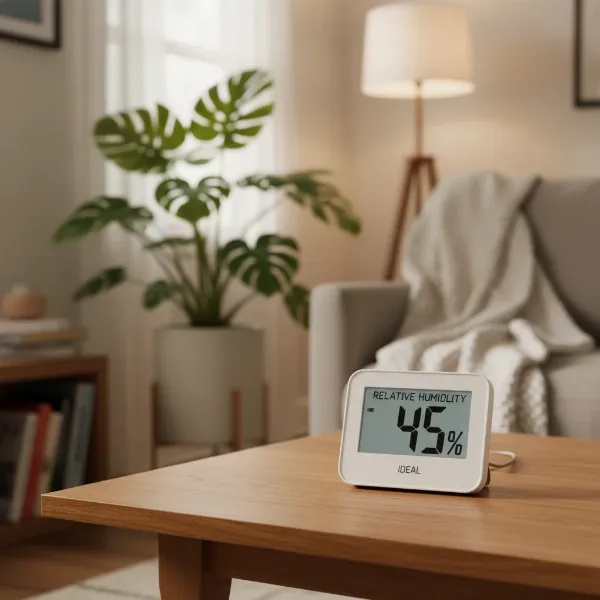 Digital hygrometer displaying 45% relative humidity in a comfortable indoor setting
Choosing the Right Humidifier to Combat Static
Selecting the best humidifier for your needs involves understanding the different types available and what features are most beneficial for static control.
Overview of Humidifier Types
- Evaporative Humidifiers: These are often recommended for overall home humidity control. They use a fan to blow air over a wetted wick or filter, evaporating water into the air. Evaporative models are often considered “self-regulating” because the air only absorbs as much moisture as it can hold, reducing the risk of over-humidification. They are generally energy-efficient and effective for larger areas. [cite: 5 (search 1), 1 (search 4), 5 (search 5)]
- Ultrasonic Humidifiers: These devices use high-frequency vibrations to create a fine, cool mist. They are notably quiet, making them popular for bedrooms and offices. However, they can sometimes produce “white dust” (mineral residue from tap water) if not used with distilled water or if tap water has high mineral content. [cite: 4 (search 4)]
- Warm Mist Humidifiers: These units boil water to release a warm, clean mist into the air. The boiling process kills most bacteria and mold, making the mist virtually germ-free. They can be soothing in cold weather but consume more energy than cool mist models due to the heating element.
- Whole-House Humidifiers: Integrated directly into your home’s HVAC system, whole-house humidifiers provide consistent humidity control throughout your entire living space. They are a powerful, low-maintenance solution for comprehensive static prevention in larger homes, often equipped with advanced controls and sensors. [cite: 1 (search 4)]
|
Our Picks for the Best Humidifier in 2026
As an Amazon Associate I earn from qualifying purchases.
|
||
| Num | Product | Action |
|---|---|---|
| 1 | MegaWise Topfill 7-colour Night light humidifier for Kid bedroom with 3.5L Large Capacity, No leakage Design Fine Mist Output Auto Shutoff, Essential Oil Safe Tank |

|
| 2 | Dreo Smart Humidifiers for Bedroom, Top Fill 4L Supersized Humidifier Large Room with 28 dB, 36H Runtime, Touch/APP/Voice Control, Nightlight, Cool Mist Humidifiers for Baby, Plants, Indoor, Black |
|
| 3 | Dreo Humidifiers for Bedroom, 4L Top Fill for Large Room, 36H Runtime, 28 dB Quiet Supersized Cool Mist Air Humidifier for Baby Nursery, Plants, Indoor, Night Light, Easy to Clean & Fill, White |
|
| 4 | DREO Humidifiers for Bedroom, 3L Top Fill 30H & 26dB Quiet Runtime for Large Room, Cool Mist Ultrasonic Humidifier with Humidity Sensor, Night Light for Home, Baby, Nursery, Plants, New Edition |
|
| 5 | LEVOIT - Humidifiers for Bedroom - Quiet (3L Water Tank) - Cool Mist/Top Fill/Essential Oil Diffuser/25Watt - Home/Large Room - 360° Nozzle - Rapid Ultrasonic Humidification for Baby Nursery/Plant |
|
| 6 | COO Humidifiers for Bedroom, 2L Tank for Large Room, 30 Hour Runtime, 28dB Quiet Cool Mist Humidifier for Home, Baby Nursery, Plants, Indoor, Office, Easy to Fill & Clean,Night Light and Auto Shut-off |
|
| 7 | DREO 6L Top Fill Humidifiers for Bedroom, 60H Runtime 28 dB Quiet Supersized Cool Mist Air Humidifiers for Large Room, Baby Nursery, Plant, Indoor, Night Light, Easy to Clean, Precise Humidity Control |
|
| 8 | LEVOIT Humidifiers for Bedroom Large Room Home, (6L) Cool Mist Top Fill Essential Oil Diffuser for Baby & Plants, Smart App & Voice Control, Rapid Humidification & Auto Mode - Quiet Sleep Mode, Gray |
|
| 9 | LEVOIT Top Fill Humidifiers for Bedroom, 2.5L Tank for Large Room, Easy to Fill & Clean, 28dB Quiet Cool Mist Air Humidifier for Home Baby Nursery & Plants, Auto Shut-off for Safety, 25H |
|
| 10 | Homvana Humidifiers for Bedroom Home, 3.6 L Cool Mist Top-Fill 34H Super Long Time, Quiet 23dB, Baby Humidifier, Oil Diffuser for Large Room, House, Plant, Nursery, Office, BPA FREE, Ultrasonic (Grey) |
|
Key Features for Static Control
When choosing a humidifier specifically for static electricity, consider these features:
- Built-in Humidistat: This allows the humidifier to automatically turn on and off to maintain a preset humidity level, ensuring you stay within the 40-60% optimal range without constant manual adjustment.
- Appropriate Coverage Area: Match the humidifier’s capacity to your room size. A small personal humidifier won’t be effective for a large living room, and a unit too large for a small space could lead to over-humidification.
- Ease of Cleaning and Maintenance: Regular cleaning is crucial to prevent mineral buildup, mold, and bacterial growth. Look for models with accessible tanks and components that are easy to clean. Filters (common in evaporative models) also need periodic replacement.
- Quiet Operation: If the humidifier will be used in a bedroom or office, noise level can be a significant factor. Ultrasonic models are typically the quietest.
- Water Tank Capacity and Run Time: A larger tank means less frequent refills, which is a convenience factor, especially for continuous operation to combat persistent static.
Beyond the Mist: Additional Tips to Banish Static
While a humidifier is a primary tool for combating static, combining it with other strategies can enhance your comfort and effectiveness.
- Fabric Softeners and Dryer Sheets: In the laundry, these products help reduce friction between fabrics, which is a common cause of static cling. Using them in the wash or dryer can significantly lessen static buildup on clothes. [cite: 1, 2 (search 5)]
- Moisturize Your Skin: Dry skin can contribute to static buildup on your body. Regularly applying moisturizing lotion can help your skin retain moisture, making it less prone to generating and holding static charges. [cite: 1, 2 (search 5)]
- Anti-Static Sprays: For carpets, upholstery, or specific garments, anti-static sprays can provide a temporary but effective solution by increasing the surface conductivity of the material.
- Wear Natural Fibers: Certain synthetic fabrics like polyester and nylon are more prone to generating static than natural fibers such as cotton and wool. Opting for natural materials can reduce static buildup. [cite: 2, 4 (search 5)]
- Grounding Methods: If you’re experiencing frequent shocks, touching a metal object (like a doorknob or faucet) with a key or a coin before touching it with your bare hand can help discharge the static more gradually, preventing a painful shock. [cite: 3, 4 (search 5)]
By integrating these tips with the consistent use of a humidifier, you can create a comprehensive defense against static electricity, making your home a more comfortable and shock-free zone.
Maintaining Your Humidifier for Optimal Performance and Health
To ensure your humidifier effectively combats static electricity and contributes to a healthy indoor environment, regular cleaning and maintenance are non-negotiable.
- Importance of Regular Cleaning: Over time, humidifiers can accumulate mineral deposits from water (especially tap water), as well as become breeding grounds for mold and bacteria if not cleaned properly. This can lead to the emission of unhealthy airborne particles and reduce the unit’s efficiency. Cleaning every few days to once a week is generally recommended, depending on usage.
- Preventing Mineral Buildup and Mold: Always follow the manufacturer’s cleaning instructions. Typically, this involves emptying the tank daily, rinsing it, and then deep cleaning with a vinegar or bleach solution (diluted) every week or two to remove mineral scale and sanitize.
- Using Distilled vs. Tap Water: For ultrasonic humidifiers, distilled water is often recommended to prevent the release of “white dust” (mineral particles) into the air and reduce mineral buildup in the unit. Evaporative humidifiers, especially those with good filters, may handle tap water better, but filters still need regular cleaning or replacement. [cite: 2, 3 (search 4)]
- Filter Replacement: If your humidifier uses filters, replace them according to the manufacturer’s guidelines. Clogged or dirty filters can reduce efficiency and harbor contaminants.
Proper maintenance not only prolongs the life of your humidifier but also ensures that the moisture it releases is clean and healthy, effectively tackling static electricity without introducing new problems.
Conclusion
Those sudden, annoying zaps of static electricity are a clear sign that your indoor air is excessively dry. The good news is that a humidifier is an incredibly effective tool for solving this common household problem. By introducing vital moisture back into your environment, humidifiers transform dry, charge-prone air into a conductive medium, allowing static electricity to dissipate harmlessly. Maintaining a relative humidity level between 40% and 60% is your sweet spot for comfort, health, and a static-free home.
Beyond just preventing shocks, balanced humidity creates a more comfortable living space, benefiting your skin, respiratory health, and even protecting sensitive electronics. While selecting the right type of humidifier for your space and diligently maintaining it are key, the relief from constant static is a rewarding return on investment. Why continue to endure the startling surprise of static when a simple solution can make such a profound difference in your daily comfort?
Frequently Asked Questions
How quickly do humidifiers stop static?
You may notice initial effects within 10-30 minutes, especially with smaller humidifiers in a contained space. However, it typically takes 4-8 hours of continuous operation to achieve and stabilize ideal humidity levels throughout a room, leading to a significant reduction in static electricity. [cite: 3 (search 4)]
Can any humidifier prevent static electricity?
Yes, any humidifier that effectively increases the relative humidity of the air to the recommended 40-60% range can help prevent static electricity. The key is to choose a unit appropriate for the size of your space and to ensure it’s properly maintained to deliver clean moisture.
Is it okay to run a humidifier all the time for static?
For consistent protection against static electricity, it is often recommended to run your humidifier continuously or as needed to maintain humidity levels between 40-60%. Many models feature humidistats that will automatically regulate operation, turning on and off to maintain your desired setting without over-humidifying. [cite: 3 (search 4)]
Does static electricity damage electronics?
Yes, static electricity, particularly in the form of electrostatic discharge (ESD), can indeed damage sensitive electronic components. Maintaining proper humidity levels (40-60% RH) is crucial in environments with electronics to help dissipate charges and protect devices from potential harm. [cite: 3 (search 4)]
What are the signs of low humidity in a home?
Beyond frequent static shocks, common signs of low humidity include dry skin, chapped lips, dry nasal passages, increased susceptibility to colds and flu, worsened allergy symptoms, and even cracks in wooden furniture, flooring, or paint.