Are you tired of dry, uncomfortable indoor air? From static shocks to irritated sinuses, the effects of low humidity can make your home feel less like a sanctuary and more like a desert. Investing in a humidifier is a smart step towards improving your indoor air quality and overall comfort. But with options ranging from compact portable units to comprehensive central systems, deciding which is right for your home can be a puzzle. Let’s explore the key differences, benefits, and considerations to determine if upgrading to a central humidifier is truly worth the investment for your living space.
The Essential Role of Humidity in Your Home
Maintaining optimal indoor humidity is more than just a matter of comfort; it’s crucial for your health and the longevity of your home. Dry air, often prevalent during colder months or in arid climates, can wreak havoc on your well-being. It can lead to common complaints like dry skin, chapped lips, and irritated eyes and throat. For those with respiratory conditions such as asthma or allergies, insufficient moisture in the air can exacerbate symptoms, making breathing more difficult and sleep less restful. Beyond personal health, extremely dry conditions can also damage your home, causing wood floors, furniture, and even structural elements to crack or warp over time. Aiming for a relative humidity level between 30% and 50% is generally recommended to prevent these issues, ensuring a healthier and more comfortable environment for everyone.
Exploring Humidifier Types: Central vs. Portable
When it comes to humidifiers, the primary distinction lies between portable (or room) units and whole-house (or central) systems. Each type offers a unique approach to adding moisture to your air, catering to different needs and home setups. Understanding their core functions and operational differences is the first step in making an informed decision.
Central Humidifiers: The Whole-House Solution
A central humidifier integrates directly with your home’s existing HVAC (heating, ventilation, and air conditioning) system, often installed near the furnace. This setup allows it to distribute moisture evenly throughout your entire home via the ductwork. Central units are typically connected to your home’s plumbing, eliminating the need for manual refilling. They are controlled by a humidistat, which functions much like a thermostat, automatically monitoring and adjusting humidity levels to your desired setting.
-
Pros of Central Humidifiers:
- Whole-Home Coverage: Provides consistent humidity across all rooms connected to your HVAC system.
- Low Maintenance: No daily refilling; requires less frequent cleaning and annual pad changes.
- Convenience: Fully automatic operation with a humidistat; “set it and forget it” experience.
- Quiet Operation: Integrated within your HVAC system, they operate almost silently.
- Out of Sight: Hidden from view, freeing up living space.
- Energy Efficiency: Utilizes your existing furnace fan to distribute moisture, potentially lowering heating bills as humidified air feels warmer.
- Long-Term Value: Considered a home infrastructure upgrade, adding value to your property.
-
Cons of Central Humidifiers:
- Higher Upfront Cost: Professional installation is required, which can range from $600 to $1,400 or more.
- Professional Installation: Not a DIY project.
- Not Portable: Permanently installed, so not an option for renters or if you move frequently.
- HVAC Dependency: Primarily works with forced-air heating systems; not compatible with radiators or ductless mini-splits.
- Maintenance Needs: Still requires annual cleaning and filter/pad replacement to prevent mineral buildup, mold, or bacteria.
- Risk of Over-humidification: If not properly controlled, excessive humidity can lead to mold growth.
|
Our Picks for the Best Humidifier in 2026
As an Amazon Associate I earn from qualifying purchases.
|
||
| Num | Product | Action |
|---|---|---|
| 1 | Dreo Humidifiers for Bedroom, 4L Top Fill for Large Room, 36H Runtime, 28 dB Quiet Supersized Cool Mist Air Humidifier for Baby Nursery, Plants, Indoor, Night Light, Easy to Clean & Fill, White |

|
| 2 | COO Humidifiers for Bedroom, 2L Tank for Large Room, 30 Hour Runtime, 28dB Quiet Cool Mist Humidifier for Home, Baby Nursery, Plants, Indoor, Office, Easy to Fill & Clean,Night Light and Auto Shut-off |
|
| 3 | MegaWise Topfill 7-colour Night light humidifier for Kid bedroom with 3.5L Large Capacity, No leakage Design Fine Mist Output Auto Shutoff, Essential Oil Safe Tank |
|
| 4 | Dreo Smart Humidifiers for Bedroom, Top Fill 4L Supersized Humidifier Large Room with 28 dB, 36H Runtime, Touch/APP/Voice Control, Nightlight, Cool Mist Humidifiers for Baby, Plants, Indoor, Black |
|
| 5 | DREO 6L Top Fill Humidifiers for Bedroom, 60H Runtime 28 dB Quiet Supersized Cool Mist Air Humidifiers for Large Room, Baby Nursery, Plant, Indoor, Night Light, Easy to Clean, Precise Humidity Control |
|
| 6 | LEVOIT Top Fill Humidifiers for Bedroom, 2.5L Tank for Large Room, Easy to Fill & Clean, 28dB Quiet Cool Mist Air Humidifier for Home Baby Nursery & Plants, Auto Shut-off for Safety, 25H |
|
| 7 | LEVOIT - Humidifiers for Bedroom - Quiet (3L Water Tank) - Cool Mist/Top Fill/Essential Oil Diffuser/25Watt - Home/Large Room - 360° Nozzle - Rapid Ultrasonic Humidification for Baby Nursery/Plant |
|
| 8 | LEVOIT Humidifiers for Bedroom Large Room Home, (6L) Cool Mist Top Fill Essential Oil Diffuser for Baby & Plants, Smart App & Voice Control, Rapid Humidification & Auto Mode - Quiet Sleep Mode, Gray |
|
| 9 | Homvana Humidifiers for Bedroom Home, 3.6 L Cool Mist Top-Fill 34H Super Long Time, Quiet 23dB, Baby Humidifier, Oil Diffuser for Large Room, House, Plant, Nursery, Office, BPA FREE, Ultrasonic (Grey) |
|
| 10 | DREO Humidifiers for Bedroom, 3L Top Fill 30H & 26dB Quiet Runtime for Large Room, Cool Mist Ultrasonic Humidifier with Humidity Sensor, Night Light for Home, Baby, Nursery, Plants, New Edition |
|
Portable Humidifiers: Targeted Moisture on Demand
Portable humidifiers are standalone units designed to humidify a single room or a small area. They come in various types, including ultrasonic, evaporative, and warm mist. These units have a water reservoir that needs manual refilling and typically plug into a standard electrical outlet. They offer flexibility as they can be moved from room to room as needed.
-
Pros of Portable Humidifiers:
- Lower Upfront Cost: Generally much more affordable to purchase than central units.
- No Installation: Simply fill with water and plug in.
- Portability: Easy to move and position wherever localized humidity is needed most.
- Targeted Humidity: Ideal for specific rooms, such as a bedroom for better sleep or a child’s room during illness.
- Renter-Friendly: A great option if you live in a rented space and cannot make permanent modifications.
-
Cons of Portable Humidifiers:
- Limited Coverage: Only effective for one room or a small area; multiple units are needed for whole-house humidification.
- Frequent Refilling: Water reservoirs typically need daily refilling.
- High Maintenance: Requires cleaning every 1-3 days to prevent mold, mildew, and bacteria growth, which can be spread into the air.
- Visible and Space-Consuming: Takes up floor or counter space in your living areas.
- Noise Level: Can vary, with some models being noticeably louder than central systems.
- Inconsistent Humidity: Difficult to maintain a consistent humidity level across an entire home.
> “Choosing between a central and portable humidifier ultimately depends on your lifestyle, home size, and specific humidity needs. A whole-house system offers unparalleled convenience and consistency, while portables provide flexibility and a lower entry cost.” – John Smith, HVAC Expert at Humidifiert.com
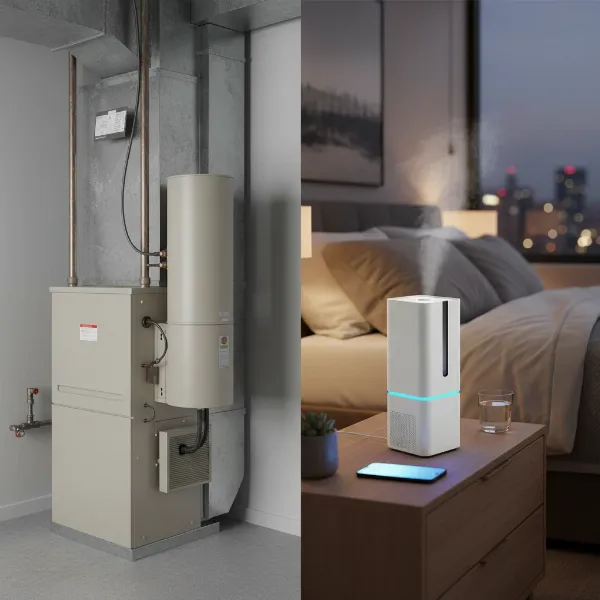 A split image comparing a central whole-house humidifier connected to an HVAC system and a compact portable humidifier on a table, highlighting their differences in scale and integration.
Comparison Table: Central vs. Portable Humidifiers
To help you visualize the differences, here’s a direct comparison of central and portable humidifiers across key features:
| Feature | Central Humidifier | Portable Humidifier |
|---|---|---|
| Coverage | Whole Home | Single Room/Area |
| Noise Level | Very Quiet (integrated) | Varies (Quiet to Moderate) |
| Energy Efficiency | High (per sq ft, uses HVAC fan) | Varies (room-specific, can be lower if multiple units) |
| Maintenance | Less frequent (annual cleaning/pad change) | Daily refilling, frequent cleaning (every 1-3 days) |
| Upfront Cost | High (unit + professional installation) | Low (unit purchase only) |
| Installation | Professional required | DIY (plug-and-play) |
| Portability | None | High |
| Water Source | Direct plumbing connection | Manual reservoir refilling |
Navigating Your Purchase: A Humidifier Buying Guide
The decision to invest in a humidifier—and which type—should align with your specific circumstances. Consider these factors to guide your choice:
Assessing Your Humidification Needs
- Home Size and Layout: For expansive homes or open-concept living, a central humidifier provides even humidity distribution without multiple visible units. If you only experience dry air symptoms in a single room, a portable unit might suffice.
- Climate: Homes in consistently dry climates or those experiencing harsh, dry winters often benefit most from a whole-house solution for sustained comfort.
- Health Concerns: If allergies, asthma, or chronic dry skin affect family members throughout the home, consistent whole-house humidification can offer significant relief. For localized relief, such as during a cold, a portable unit in a bedroom is effective.
- Existing HVAC System: Central humidifiers require a forced-air heating system for integration. If you have radiant heat, baseboard heaters, or ductless mini-splits, portable units are your primary option.
Budget and Ongoing Costs
While portable units have a lower initial price point, remember to factor in potential long-term expenses.
- Upfront Investment: Central humidifiers have a higher initial cost due to the unit itself and professional installation. Portable units are considerably cheaper to buy.
- Operational Costs: Central humidifiers often boast higher energy efficiency per square foot, especially since they leverage your existing furnace fan. Portable units, particularly if you need several, can lead to higher electricity usage and the cost of distilled water (if recommended by the manufacturer to prevent mineral buildup and white dust).
- Maintenance Costs: Factor in the annual cost of replacement pads/filters for central units (typically $50-$100) and potentially more frequent filter replacements for portable evaporative models.
Reputable Humidifier Brands
While we won’t recommend specific models here, researching brands known for reliability, good customer service, and innovative features (like smart home compatibility for central units or easy-to-clean designs for portables) is advisable. Look for ENERGY STAR certified models for optimal efficiency.
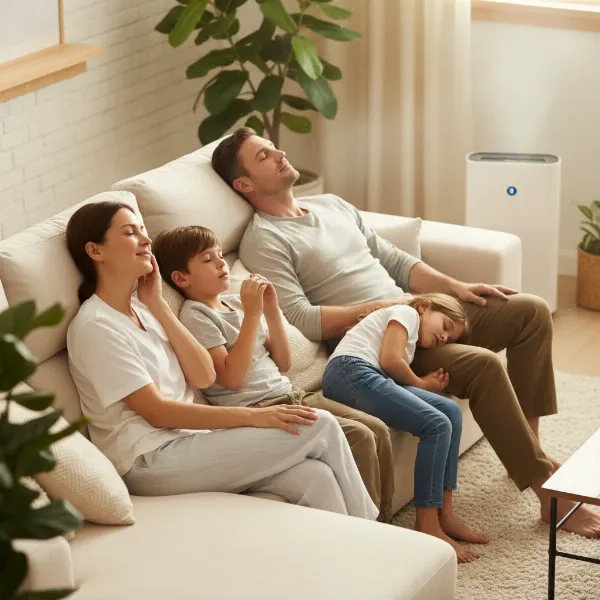 People experiencing relief from dry air symptoms like dry skin, irritated throat, and sinus issues due to optimal indoor humidity.
Top Picks: Finding Your Ideal Humidifier
Given the distinct advantages of both central and portable units, your “top pick” will heavily depend on your unique situation.
- For Comprehensive, Hands-Off Humidification: A central humidifier is the undisputed champion. If you own your home, have a forced-air system, and desire consistent, automatic humidity control throughout your entire living space with minimal daily interaction, the upgrade is unequivocally worth it. It’s an investment in holistic home comfort and health.
- For Targeted Relief and Flexibility: A high-quality portable humidifier is your best bet. If you rent, only need humidity in specific rooms, or are on a tighter budget for the initial purchase, portable units offer excellent localized relief. Look for models with larger tanks to reduce refilling frequency and designs that are easy to disassemble and clean to combat potential mold and bacteria growth. Ultrasonic models tend to be quieter, while evaporative models are self-regulating and less likely to over-humidify.
Cleaning and Maintaining Your Humidifier
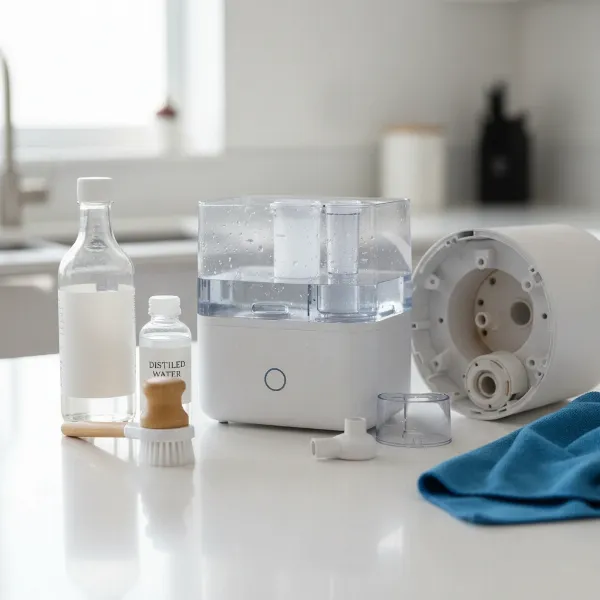
Regardless of the type you choose, regular cleaning and maintenance are non-negotiable for safe and effective operation. Neglecting your humidifier can lead to mineral buildup, which reduces efficiency, or worse, foster the growth of mold and bacteria that can then be dispersed into your indoor air.
Importance of Regular Cleaning
Water is a breeding ground for microorganisms, and humidifiers, by their nature, involve standing water. Without routine cleaning, these devices can become a source of unhealthy air, spreading germs, mold spores, and white mineral dust (from ultrasonic models using hard water) throughout your home. This negates the very health benefits you seek from humidification.
Proper Cleaning Steps
- For Portable Humidifiers:
- Daily Refill: Use distilled or demineralized water to minimize mineral buildup.
- Every 1-3 Days: Empty the tank, rinse thoroughly, and clean all surfaces that come into contact with water using a 3% hydrogen peroxide solution or diluted white vinegar. Scrub away any film or mineral deposits.
- Rinse Thoroughly: After cleaning, rinse all components multiple times with fresh water to remove any cleaning solution residue.
- Dry: Allow parts to air dry completely before reassembling and refilling.
- For Central Humidifiers:
- Annual Cleaning: At the end of the heating season, clean the humidifier with diluted white vinegar to loosen mineral deposits before they harden.
- Filter/Pad Replacement: Replace humidifier pads or filters annually, or as recommended by the manufacturer.
- Professional Inspection: Many HVAC companies include humidifier checks during routine furnace maintenance, ensuring proper function and cleanliness.
Maintenance for Longevity
Beyond regular cleaning, adhering to manufacturer guidelines for filter replacement and addressing any unusual noises or reduced output promptly will extend the life of your humidifier. Consistent care ensures your unit operates efficiently, providing clean, healthy moisture for years to come.
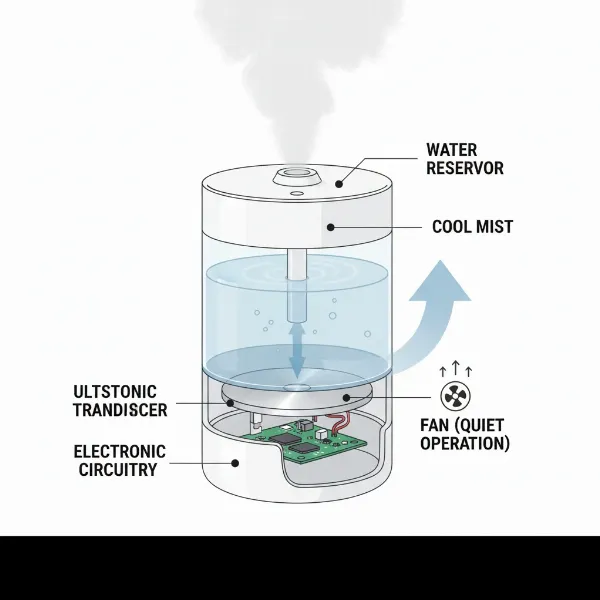 Illustrations of various humidifier types including an ultrasonic unit emitting visible mist and an evaporative unit with a wick and fan, showing their distinct operating principles.
Conclusion
Deciding between a central humidifier and a portable unit involves weighing convenience, coverage, cost, and maintenance. While portable humidifiers offer a flexible, budget-friendly entry point for localized relief, they demand consistent manual effort. A central humidifier, though a larger initial investment, delivers seamless, whole-home humidification with minimal daily interaction, potentially offering superior comfort, health benefits, and even energy savings in the long run. For homeowners seeking a comprehensive, “set it and forget it” solution to combat dry air throughout their entire living space, the upgrade to a central humidifier is often a worthwhile investment that enhances both well-being and home integrity. What level of humidification best suits your lifestyle and home?
Frequently Asked Questions
Is a central humidifier truly more energy-efficient than multiple portable units?
Yes, generally, a central humidifier is more energy-efficient for whole-home humidification. It uses your existing HVAC system’s fan to distribute moisture, avoiding the need for multiple portable units, each drawing individual power, and often operates more effectively to maintain a consistent humidity level.
Can I install a central humidifier myself?
Professional installation is strongly recommended, and often required, for central humidifiers. They connect directly to your home’s HVAC system and plumbing, necessitating specialized knowledge to ensure correct integration, prevent leaks, and comply with safety standards.
How often should I clean my portable humidifier?
Portable humidifiers should be cleaned thoroughly every 1 to 3 days to prevent the growth and dispersion of mold, bacteria, and mineral deposits. Daily refilling with distilled water is also advised to minimize mineral buildup.
Do central humidifiers work in homes without ductwork?
No, most central humidifiers are designed to integrate with forced-air heating and cooling systems that utilize ductwork to distribute air throughout the home. They are not compatible with homes using radiant heat, baseboard heaters, or ductless mini-splits.
Will a central humidifier help with my allergies?
By maintaining optimal indoor humidity levels (30-50%), a central humidifier can alleviate dry air symptoms that often aggravate allergies, such as irritated nasal passages and a dry throat. However, it is not a direct treatment for allergies themselves and should be part of a broader indoor air quality strategy.