Snoring is more than just an irritating nighttime noise; it’s a common sleep disruptor affecting millions globally, with an estimated 40% of adult men and 24% of adult women experiencing it. For many, the quest for a peaceful night’s sleep leads to exploring various remedies, and one question frequently arises: can a humidifier offer relief? The truth is, while a humidifier isn’t a miracle cure for all types of snoring, it can be a surprisingly effective tool when dry air is the primary culprit. By understanding how dry air impacts your airways and how humidifiers work, you can determine if this simple device holds the key to quieter nights and improved sleep.
Understanding Snoring: More Than Just Noise
Snoring occurs when airflow through your nose and throat is partially obstructed during sleep, causing the surrounding tissues to vibrate and produce sound. As you drift off, the muscles in your throat relax, and your airway can narrow. When air passes through this constricted space, it causes the soft palate, uvula, and other tissues to vibrate, resulting in the characteristic snoring sound.
The Role of Dry Air in Exacerbating Snoring
One significant factor that can worsen or even cause snoring is dry air. When the air in your bedroom lacks sufficient moisture, it can irritate and dehydrate the delicate mucous membranes in your nasal passages and throat. This dryness leads to several problems:
- Irritation and Inflammation: Dry air can inflame the throat and nasal tissues, causing them to swell. This swelling further narrows the airways, increasing the likelihood and intensity of vibrations.
- Increased Mucus Production: To counteract the dryness, your body might produce more mucus, which can contribute to congestion and further obstruct airflow.
- Difficulty Breathing: Dry, irritated airways make breathing more difficult, sometimes forcing individuals to breathe through their mouths, a common trigger for snoring.
|
Our Picks for the Best Humidifier in 2026
As an Amazon Associate I earn from qualifying purchases.
|
||
| Num | Product | Action |
|---|---|---|
| 1 | LEVOIT - Humidifiers for Bedroom - Quiet (3L Water Tank) - Cool Mist/Top Fill/Essential Oil Diffuser/25Watt - Home/Large Room - 360° Nozzle - Rapid Ultrasonic Humidification for Baby Nursery/Plant |

|
| 2 | LEVOIT Top Fill Humidifiers for Bedroom, 2.5L Tank for Large Room, Easy to Fill & Clean, 28dB Quiet Cool Mist Air Humidifier for Home Baby Nursery & Plants, Auto Shut-off for Safety, 25H |
|
| 3 | Homvana Humidifiers for Bedroom Home, 3.6 L Cool Mist Top-Fill 34H Super Long Time, Quiet 23dB, Baby Humidifier, Oil Diffuser for Large Room, House, Plant, Nursery, Office, BPA FREE, Ultrasonic (Grey) |
|
| 4 | LEVOIT Humidifiers for Bedroom Large Room Home, (6L) Cool Mist Top Fill Essential Oil Diffuser for Baby & Plants, Smart App & Voice Control, Rapid Humidification & Auto Mode - Quiet Sleep Mode, Gray |
|
| 5 | Dreo Humidifiers for Bedroom, 4L Top Fill for Large Room, 36H Runtime, 28 dB Quiet Supersized Cool Mist Air Humidifier for Baby Nursery, Plants, Indoor, Night Light, Easy to Clean & Fill, White |
|
| 6 | COO Humidifiers for Bedroom, 2L Tank for Large Room, 30 Hour Runtime, 28dB Quiet Cool Mist Humidifier for Home, Baby Nursery, Plants, Indoor, Office, Easy to Fill & Clean,Night Light and Auto Shut-off |
|
| 7 | Dreo Smart Humidifiers for Bedroom, Top Fill 4L Supersized Humidifier Large Room with 28 dB, 36H Runtime, Touch/APP/Voice Control, Nightlight, Cool Mist Humidifiers for Baby, Plants, Indoor, Black |
|
| 8 | DREO Humidifiers for Bedroom, 3L Top Fill 30H & 26dB Quiet Runtime for Large Room, Cool Mist Ultrasonic Humidifier with Humidity Sensor, Night Light for Home, Baby, Nursery, Plants, New Edition |
|
| 9 | MegaWise Topfill 7-colour Night light humidifier for Kid bedroom with 3.5L Large Capacity, No leakage Design Fine Mist Output Auto Shutoff, Essential Oil Safe Tank |
|
| 10 | DREO 6L Top Fill Humidifiers for Bedroom, 60H Runtime 28 dB Quiet Supersized Cool Mist Air Humidifiers for Large Room, Baby Nursery, Plant, Indoor, Night Light, Easy to Clean, Precise Humidity Control |
|
Many people experience heightened snoring during colder months when indoor heating systems drastically reduce humidity levels. Waking up with a dry mouth, dry skin, coughing, or nosebleeds alongside your snoring could be strong indicators that dry air is playing a significant role.
Other Common Culprits Behind Snoring
While dry air is a notable factor, it’s crucial to acknowledge that snoring can stem from various sources. A humidifier will only address snoring related to dryness; other causes require different approaches. Common non-dry air causes include:
- Nasal Congestion: Blocked nasal passages due to allergies, colds, or sinus infections force mouth breathing, leading to snoring.
- Anatomical Factors: Issues like a deviated septum, enlarged tonsils or adenoids, nasal polyps, or a small jaw can physically obstruct the airway.
- Sleep Position: Sleeping on your back can cause the tongue and soft palate to collapse backward into the throat, narrowing the airway.
- Obesity: Excess weight, particularly around the neck, can compress the airway and contribute to snoring.
- Age: As we age, throat muscles naturally lose tone and can relax more during sleep.
- Alcohol and Sedatives: These substances relax throat muscles, increasing the chance of airway obstruction.
- Sleep Apnea: Snoring can be a symptom of obstructive sleep apnea (OSA), a serious condition where breathing repeatedly stops and starts during sleep. A humidifier alone will not treat sleep apnea.
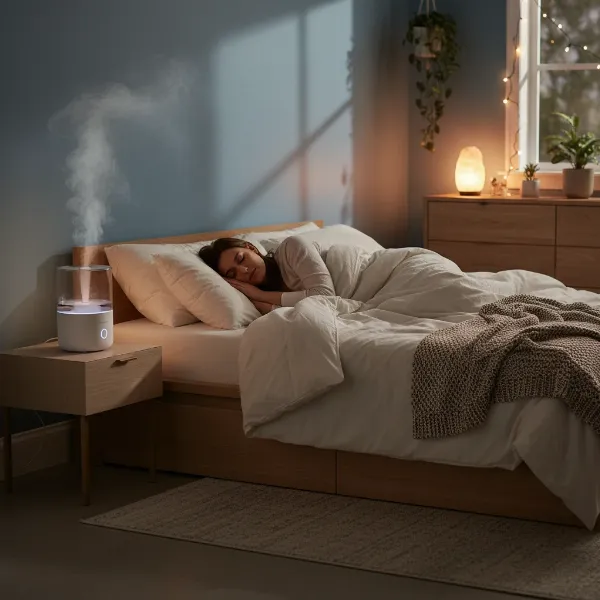 A person sleeping soundly in a bedroom with a cool mist humidifier running nearby, symbolizing snoring relief through improved air quality.
The Humidifier’s Role: How Moisture Can Help
A humidifier works by adding moisture, or water vapor, into the air. When strategically used in your bedroom, it can significantly alleviate snoring that is aggravated by dry environments.
Soothing Irritated Airways and Reducing Inflammation
The primary way a humidifier helps with snoring is by moisturizing your airways. Dry air parches the delicate tissues lining your nose and throat, making them susceptible to irritation and inflammation. By introducing moisture into the air, a humidifier helps to:
- Lubricate Tissues: Moist air keeps your nasal passages and throat hydrated, preventing them from drying out overnight.
- Reduce Swelling: Hydrated tissues are less likely to become inflamed and swell, which in turn helps maintain an open airway and reduces the vibrations that cause snoring.
- Ease Congestion: For those with congestion exacerbated by dry air, the added moisture can thin mucus, making it easier to clear and improving nasal breathing.
“Using a humidifier can be a simple yet effective way to alleviate snoring by ensuring the airways remain moist.” – Dr. Elena Petrova, Sleep Specialist at Liv Hospital
Improving Nasal Passages and Preventing Mouth Breathing
When nasal passages are dry and irritated, it can become difficult to breathe through the nose. This often leads to mouth breathing during sleep, a common factor contributing to snoring. A humidifier helps by:
- Promoting Nasal Breathing: By keeping nasal passages moist and clear, a humidifier encourages natural nasal breathing, which is generally quieter and healthier than mouth breathing.
- Reducing Oral Dryness: Mouth breathing can lead to a very dry mouth and throat in the morning. Humidified air helps maintain moisture, even if you still breathe through your mouth occasionally.
When Humidifiers Are Most Effective for Snoring
Humidifiers offer the most benefit for snoring that is directly linked to environmental dryness. This includes:
- Dry Climates: If you live in an arid region with consistently low humidity.
- Winter Months: When indoor heating systems are running, they strip moisture from the air, making a humidifier particularly useful.
- Mild Congestion: Snoring caused by mild congestion, colds, or allergies that result in dry, irritated airways can often be eased by humidified air.
It’s important to remember that a humidifier is a supportive tool. If your snoring is severe, persistent, or accompanied by gasping or choking, it’s crucial to consult a healthcare professional to rule out conditions like sleep apnea.
Types of Humidifiers and Their Impact on Snoring
Several types of humidifiers are available, each with distinct features that might appeal to those seeking snoring relief. Understanding these differences can help you choose the best model for your needs.
Cool Mist Humidifiers
Cool mist humidifiers release a fine, cool mist into the air. They are popular choices, especially for households with children, as they do not use a heating element.
- Ultrasonic Humidifiers: These use high-frequency vibrations to produce a fine, cool mist. They are typically very quiet, making them ideal for bedrooms.
- Pros: Quiet operation, energy-efficient, no burn risk.
- Cons: Can produce “white dust” if tap water with high mineral content is used, requires frequent cleaning to prevent mold buildup.
- Evaporative Humidifiers: These use a fan to blow air through a wet wick filter, evaporating water into the air as a cool, invisible mist.
- Pros: Self-regulating (adds moisture until the desired humidity level is reached), less likely to over-humidify, no white dust.
- Cons: Fan can be noisy, requires filter replacement, needs regular cleaning.
Potential Impact on Snoring: Both ultrasonic and evaporative cool mist humidifiers can effectively add moisture to the air, helping to soothe dry airways and reduce snoring caused by dryness and mild congestion. Their cool mist can also feel refreshing to irritated nasal passages.
Warm Mist Humidifiers
Warm mist humidifiers boil water to create a soothing, warm vapor. The boiling process can help kill bacteria and mold in the water before it’s released into the air.
- Pros: Can provide a comforting warmth, steam is typically sterile, can be helpful for cold and flu symptoms.
- Cons: Uses more energy, can increase room temperature slightly, poses a burn risk from hot water or steam (not recommended for children’s rooms), requires regular cleaning to prevent mineral buildup.
Potential Impact on Snoring: The warm, moist air can be particularly comforting for sore throats and congested nasal passages, potentially offering significant relief for snoring associated with colds, allergies, and general dry irritation.
Central Humidifiers
These systems are integrated into your home’s HVAC system and humidify the entire house.
- Pros: Whole-house humidity control, low maintenance once installed.
- Cons: High initial cost, professional installation required.
Potential Impact on Snoring: While effective for overall home humidity, they are a significant investment if snoring is your sole concern. They provide consistent, widespread moisture that can prevent dry air-related snoring throughout your living space.
Comparison of Humidifier Types for Snoring Relief
| Feature | Ultrasonic Cool Mist | Evaporative Cool Mist | Warm Mist | Central Humidifier |
|---|---|---|---|---|
| Noise Level | Very Quiet | Moderate (fan) | Quiet | Very Quiet |
| Energy Use | Low | Low to Moderate | Higher | Moderate |
| Maintenance | Regular cleaning, filter optional | Regular cleaning, filter replacement | Regular cleaning, descaling | Annual maintenance |
| Safety | Very safe (no heat) | Safe (no heat) | Burn risk (hot water/steam) | Safe |
| Cost | Moderate | Moderate | Moderate | High |
| Snoring Benefit | Soothes dry airways, reduces congestion | Soothes dry airways, reduces congestion | Especially soothing for sore throats/colds, opens airways | Whole-house dryness relief |
Choosing the Right Humidifier for Snoring Relief
Selecting the best humidifier involves considering your specific needs, the size of your space, and your budget.
Determine Your Usage Needs
- Room Size: Humidifiers are typically rated for specific room sizes (e.g., personal, small room, medium room, whole house). Ensure the model you choose is appropriate for your bedroom.
- Runtime: Consider how long you need the humidifier to run. Many models offer 8-24 hours of continuous operation, which is ideal for overnight use.
- Noise Level: For bedrooms, a quiet model (like an ultrasonic) is often preferred to avoid adding another sleep disturbance.
- Features: Look for features like adjustable mist output, an auto-shutoff function when water runs low, and an integrated hygrometer.
Budget and Important Factors to Consider
Humidifiers vary in price from budget-friendly options to more advanced models. While cost is a factor, prioritize features that will directly aid in snoring relief and ease of use.
- Hygrometer and Humidistat: A built-in hygrometer measures the humidity, and a humidistat allows you to set your desired humidity level. Maintaining optimal humidity (between 30% and 50%) is crucial; too little won’t help, and too much can foster mold and dust mites.
- Ease of Cleaning: This is paramount. A humidifier that is difficult to clean will quickly become a breeding ground for bacteria and mold, potentially worsening respiratory issues rather than improving them.
- Filter vs. Filterless: Evaporative humidifiers use filters that need regular replacement, adding to the ongoing cost. Ultrasonic models are often filterless but might require distilled water to prevent white dust.
Reputable Humidifier Brands
When purchasing, look for brands known for reliability, good customer reviews, and clear instructions for use and maintenance. Some well-regarded brands in the humidifier market include:
- Levoit: Known for smart features and quiet operation.
- Honeywell: Offers a range of reliable evaporative and ultrasonic models.
- Vicks: Popular for warm mist humidifiers, often used for cold and cough relief.
- Dyson: High-end options with advanced technology and air purification features.
- Pure Enrichment: Focuses on sleek designs and effective performance.
Maximizing Effectiveness: Tips for Using Your Humidifier for Snoring
To get the most out of your humidifier for snoring relief, proper setup and diligent maintenance are key.
Placement and Optimal Humidity Levels
- Strategic Placement: Place your humidifier on a flat, waterproof surface a few feet away from your bed. Avoid placing it directly under vents or too close to walls, as this can affect its efficiency and potentially damage surfaces.
- Maintain Ideal Humidity: Aim for indoor humidity levels between 30% and 50%. Use a hygrometer (either built-in or a separate device) to monitor the humidity. Over-humidifying can lead to condensation, mold growth, and dust mites, which can trigger allergies and worsen respiratory problems.
Regular Cleaning and Maintenance
This is arguably the most critical aspect of using a humidifier. Neglecting cleaning can turn your helpful device into a health hazard.
- Daily Rinse: Empty and rinse the water tank daily. Refill with fresh, clean water.
- Weekly Cleaning: At least once a week, thoroughly clean all parts that come into contact with water. Use a vinegar solution (white vinegar and water) to remove mineral deposits, then scrub any residue. Some manufacturers provide specific cleaning tablets or solutions.
- Sterilize: For warm mist humidifiers, boiling water usually sterilizes the output. For cool mist, a diluted bleach solution (following manufacturer instructions) can be used for sterilization, followed by thorough rinsing.
- Change Filters (if applicable): Replace filters in evaporative humidifiers according to the manufacturer’s recommendations.
- Use Distilled Water: If you have hard water, using distilled water can help prevent “white dust” (mineral deposits) from ultrasonic humidifiers and reduce mineral buildup in all types, making cleaning easier.
“A common mistake is neglecting humidifier maintenance. Without regular cleaning, humidifiers can become breeding grounds for bacteria and mold, which can ironically worsen respiratory issues and snoring.” – Admin, Humidifiert.com
When to Consult a Doctor
While a humidifier can be beneficial, it’s not a substitute for medical advice. You should consult a doctor if:
- Snoring persists or worsens: Even after consistently using a humidifier, your snoring doesn’t improve.
- Symptoms of sleep apnea: You or your partner notice gasping, choking, pauses in breathing, excessive daytime sleepiness, or morning headaches.
- Chronic health conditions: You have underlying respiratory issues, severe allergies, or other health concerns that might contribute to snoring.
Integrating with Other Anti-Snoring Strategies
For many, a humidifier is just one piece of a larger puzzle. Combining it with other strategies can yield better results:
- Sleep Position Changes: Try sleeping on your side instead of your back, as this can prevent the tongue and soft palate from collapsing.
- Nasal Strips or Dilators: These can physically open nasal passages, improving airflow.
- Allergy Management: If allergies contribute to congestion, work with a doctor to manage them effectively.
- Weight Management: Losing even a small amount of weight can sometimes reduce snoring.
- Avoid Alcohol and Sedatives: Especially before bedtime, as they relax throat muscles.
Beyond Humidifiers: Other Snoring Solutions
While humidifiers offer a promising avenue for dry air-related snoring, a holistic approach often yields the best results. Beyond managing humidity, several other strategies can significantly impact snoring frequency and intensity.
Lifestyle Changes
Simple adjustments to your daily habits can make a big difference. Maintaining a healthy weight reduces tissue around the throat that can obstruct airways. Avoiding alcohol and sedatives, particularly in the hours before bed, minimizes muscle relaxation in the throat that contributes to snoring. Changing your sleep position, especially from back to side, can prevent your tongue and soft palate from collapsing into your airway.
Over-the-Counter Aids
For mild to moderate snoring, various over-the-counter products can help. Nasal strips lift and open nasal passages, while nasal dilators achieve a similar effect by gently expanding the nostrils. Oral appliances, often available through dentists, can reposition the jaw or tongue to keep the airway open.
Medical Interventions
If snoring persists despite home remedies and lifestyle changes, medical consultation is essential. An ENT specialist or sleep doctor can identify underlying issues such as a deviated septum, enlarged tonsils, or chronic sinusitis. Treatments can range from prescription nasal sprays for allergies to surgical options that address anatomical obstructions. For those diagnosed with obstructive sleep apnea, a Continuous Positive Airway Pressure (CPAP) machine is often the most effective treatment, ensuring a consistent flow of air throughout the night.
Conclusion
The truth is, a humidifier can indeed be a valuable ally in the fight against snoring, especially when dry air causes or exacerbates the problem by irritating and inflaming your airways. By introducing optimal moisture into your bedroom, a humidifier helps soothe dry tissues, reduce congestion, and promote clearer breathing, leading to a quieter and more restful night’s sleep. However, it’s not a universal remedy. Understanding the specific causes of your snoring—be it dry air, allergies, anatomical factors, or more serious conditions like sleep apnea—is crucial for selecting the right approach. When used correctly and maintained diligently, a humidifier can be an integral part of your comprehensive strategy for better sleep.
What steps will you take to ensure your sleep environment is optimally humidified for a snore-free night?
Frequently Asked Questions
Can a humidifier completely cure snoring?
No, a humidifier cannot completely cure all types of snoring. It is most effective for snoring caused or worsened by dry air, nasal congestion, or throat irritation. For snoring stemming from underlying medical conditions like sleep apnea, obesity, or anatomical issues, a humidifier will not be a standalone solution.
What is the ideal humidity level for a bedroom to reduce snoring?
The ideal humidity level for a bedroom to help reduce snoring and promote overall comfort is between 30% and 50%. Using a humidifier with a built-in hygrometer or a separate humidity monitor can help you maintain this optimal range, preventing both excessive dryness and over-humidification.
Does a humidifier help with sleep apnea snoring?
While a humidifier can alleviate dryness and discomfort associated with CPAP therapy for sleep apnea, it does not treat sleep apnea itself. Snoring due to sleep apnea requires medical diagnosis and treatment, often involving a CPAP machine, which may incorporate humidification for patient comfort.
How often should I clean my humidifier when using it for snoring?
To prevent the buildup of bacteria, mold, and mineral deposits, you should rinse and refill your humidifier’s water tank daily with fresh water. A thorough cleaning of all water-contacting parts should be performed at least once a week, often with a vinegar solution, to ensure healthy operation.
Can using a humidifier too much worsen snoring?
Yes, using a humidifier too much can potentially worsen respiratory issues, which might indirectly affect snoring. Excessive humidity (above 60%) can encourage the growth of mold, dust mites, and bacteria, triggering allergies and asthma symptoms that lead to increased congestion and irritation, thereby potentially making snoring worse.