Let’s be real, that dry, scratchy feeling in the air is no one’s friend. It’s the reason for that tickle in your throat, the static shock you get from your cat, and why your favorite houseplant looks a bit sad. You know a humidifier is the answer, but then you hit the big question: Filter Vs Filterless Humidifier Which Is Better? It feels like a major decision, and honestly, it is. Are you ready to finally clear the air on this debate and find the perfect match for your home?
Walking down the appliance aisle, you’re faced with two distinct camps. On one side, the traditionalists with their wicking filters. On the other, the sleek, modern filterless models. Choosing between them can feel overwhelming, but don’t worry. We’re about to break it all down, piece by piece, so you can make a choice that leaves you breathing easy—literally.
The Bigger Picture: Why Humidity Matters More Than You Think
Before we pit these two types against each other, let’s quickly touch on why you’re even here. A good humidifier isn’t just a gadget; it’s an investment in your well-being. Maintaining an ideal indoor humidity level (experts agree this is between 40% and 60%) does wonders.
- For Your Health: It soothes dry sinuses, reduces bloody noses, alleviates allergy and asthma symptoms, and can even help you recover from a cold faster.
- For Your Skin: Say goodbye to chapped lips and itchy, flaky skin. Proper humidity helps your skin retain its natural moisture.
- For Your Home: It protects wood floors, furniture, and musical instruments from cracking and warping. Plus, it reduces static electricity.
- For Your Sleep: A comfortable breathing environment, free from a dry, scratchy throat, is a one-way ticket to a more restful night’s sleep.
The Contenders: A Deep Dive into Each Type
Okay, time for the main event. Let’s get up close and personal with both filtered and filterless humidifiers.
The Filtered Humidifier: Your Air’s Personal Bodyguard
Think of a filtered humidifier as having a built-in security guard. The most common type is an evaporative humidifier. It works in a pretty simple, natural way.
- A wicking filter inside the unit soaks up water from the reservoir.
- A fan blows dry air from your room through this saturated filter.
- The air picks up moisture and is released back into the room as a clean, invisible cool mist.
The filter’s job is crucial: it traps mineral deposits (like calcium and magnesium) from your water, preventing them from being released into your air.
Pros of Filtered Humidifiers:
- Cleaner Mist: The filter is a fantastic defense against “white dust”—that fine mineral powder that filterless models can sometimes produce. This is a huge plus if you have hard water.
- Self-Regulating: Evaporative models are less likely to over-humidify a room. As the air becomes more saturated, the rate of evaporation naturally slows down.
- No White Dust: Since minerals are trapped in the filter, your furniture and electronics are safe from that pesky white film.
Cons of Filtered Humidifiers:
- Ongoing Costs: Filters don’t last forever. You’ll need to replace them every 1-3 months, depending on your water quality and usage. This is a recurring expense to factor in.
- Maintenance is Key: If you don’t change the filter regularly, it can become a breeding ground for mold and bacteria, which can then be blown into your air. Not what you want.
The Filterless Humidifier: The Convenient Challenger
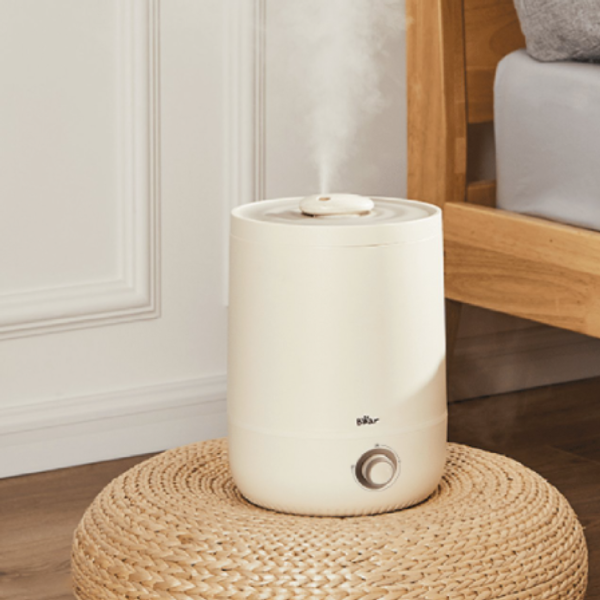
Filterless humidifiers are the modern, low-upkeep alternative. The most popular kind you’ll see is the ultrasonic humidifier. These are the ones that often produce that visible, wispy mist you see in photos.
They work using a high-frequency vibrating plate, or nebulizer.
- This plate vibrates at an ultrasonic frequency, breaking down water droplets into an ultra-fine mist.
- This cool mist is then quietly released into your room to raise the humidity.
Since there’s no filter, whatever is in your water goes directly into your air.
Pros of Filterless Humidifiers:
- No Replacement Costs: This is the biggest selling point. No filters to buy, ever. Your only cost is the initial purchase price and the tiny bit of electricity it uses.
- Often Quieter: Without a fan constantly running to pull air through a filter, many ultrasonic models are whisper-quiet, making them perfect for bedrooms and offices.
- Variety of Designs: Filterless technology allows for a wide range of sleek, compact, and stylish designs.
Cons of Filterless Humidifiers:
- The White Dust Problem: If you use hard tap water, the minerals in it will be turned into a fine white dust that settles on everything around the humidifier.
- Requires More Frequent Cleaning: Because there’s no filter to trap impurities, the unit itself can get a buildup of mineral scale and biofilm. You’ll need to clean it more diligently (think weekly) to keep it hygienic.
- Potential for Over-Humidification: Without a self-regulating evaporation process, it’s easier to make a room too damp, which can encourage mold growth if you’re not careful. Many come with built-in hygrometers to prevent this.
Filter vs Filterless Humidifier Which Is Better: A Head-to-Head Battle
So, when the dust settles (pun intended), which one comes out on top? The truth is, there’s no single winner. The “better” choice depends entirely on you. Let’s compare them side-by-side.
| Feature | Filtered Humidifier (Evaporative) | Filterless Humidifier (Ultrasonic) |
|---|---|---|
| Air Quality | Excellent. The filter traps minerals and impurities. | Depends on water. Can produce white dust with hard tap water. |
| Upfront Cost | Generally comparable, wide range of prices. | Generally comparable, wide range of prices. |
| Long-Term Cost | Higher. Requires regular filter replacements ($10-$20 each). | Lower. No recurring filter costs. |
| Maintenance | Replace filter every 1-3 months. Clean tank regularly. | More frequent cleaning. Descale and disinfect weekly. |
| Noise Level | Can be louder due to the internal fan. | Typically whisper-quiet. |
| Best For… | Homes with hard water, allergy sufferers, set-and-forget users. | Homes with soft or distilled water, light sleepers, budget-conscious users. |
A Word from the Expert
As an Indoor Air Quality Specialist, I’m often asked this question. My first response is always another question: ‘What’s your water like?’ If you live in an area with hard water, a filtered, evaporative humidifier is almost always the superior choice for hassle-free, clean moisture. If you’re committed to using distilled water, then the convenience and quiet operation of a filterless ultrasonic model can’t be beaten. – Dr. Eleanor Vance, IAQ Specialist
So, How Do You Choose? A Practical Checklist
Feeling clearer? Let’s turn this information into a decision. Ask yourself these questions to find your perfect humidifier.
- What’s Your Water Quality?
- Hard Water (high mineral content): A filtered humidifier is strongly recommended to prevent white dust.
- Soft Water or Using Distilled/Demineralized Water: A filterless humidifier is an excellent, cost-effective option.
- What’s Your Maintenance Style?
- “I’d rather pay to replace a part than clean often”: Go for a filtered model. Swapping a filter is quick and easy.
- “I don’t want any recurring costs and don’t mind a weekly cleaning routine”: A filterless model will suit you perfectly.
- Where Will You Use It?
- Bedroom: The quiet operation of a filterless ultrasonic model is a major advantage for light sleepers.
- Large Living Area: A powerful filtered evaporative model might be more effective at humidifying a larger space efficiently.
Don’t Forget Maintenance: The Secret to a Happy Humidifier
No matter which side you land on in the filter vs filterless humidifier which is better debate, one thing is non-negotiable: you must keep it clean. A dirty humidifier can do more harm than good.
As recommended by the U.S. Environmental Protection Agency (EPA), follow a regular cleaning schedule.
- Unplug the Unit: Safety first!
- Empty the Tank: Never just top off old water.
- Descale (Weekly): Fill the tank with a solution of white vinegar and water. Let it sit for 20-30 minutes to dissolve any mineral buildup.
- Rinse Thoroughly: Rinse all parts completely to remove the vinegar solution.
- Disinfect (Optional but Recommended): Use a solution of water and a few drops of bleach or hydrogen peroxide. Swish, let sit for a few minutes, then rinse, rinse, rinse until there is no smell of bleach.
- Dry and Reassemble: Let all the parts air dry before putting them back together.
Frequently Asked Questions (FAQ)
Q: Can I use tap water in a filterless humidifier?
A: You can, but it’s not always the best idea. If your tap water is hard, it will create white mineral dust that settles on surfaces. For the best performance and cleanest air from a filterless model, using distilled or demineralized water is highly recommended.
Q: Which type of humidifier is better for allergies?
A: A filtered evaporative humidifier is often the better choice for allergy sufferers. The filter helps trap airborne allergens like dust and pollen that get pulled into the machine, and it prevents the dispersal of minerals from the water, ensuring the mist is as pure as possible.
Q: Is the white dust from filterless humidifiers harmful?
A: For most healthy individuals, the white dust is generally considered a nuisance rather than a health hazard. It’s primarily composed of minerals like calcium and magnesium. However, individuals with respiratory sensitivities or asthma may find it irritating.
Q: How often do I really need to clean my humidifier?
A: It’s best to rinse the tank daily and do a thorough cleaning with vinegar at least once a week. This prevents the growth of mold, bacteria, and biofilm, which can be harmful if dispersed into the air.
Q: Are warm mist humidifiers an option?
A: Absolutely! Both filtered (steam vaporizers) and filterless (ultrasonic with a heating element) models can produce warm mist. Warm mist can feel more comforting in the winter and boils the water, which kills waterborne bacteria. However, they use more energy and pose a burn risk for children and pets.
The Final Verdict: Finding Your Perfect Air Oasis
At the end of the day, the battle of filter vs filterless humidifier which is better doesn’t have a universal champion. The winner is the one that fits seamlessly into your life, your home, and your budget.
If you value pristine air quality above all, have hard water, and don’t mind the recurring cost of filters, an evaporative filtered humidifier is your reliable workhorse. If you prioritize silent operation, have soft water (or plan to use distilled), and want to avoid ongoing expenses, a filterless ultrasonic humidifier is your sleek and modern solution.
Whichever path you choose, you’re taking a fantastic step toward a healthier, more comfortable home environment. Now go forth, conquer that dry air, and breathe a little deeper.