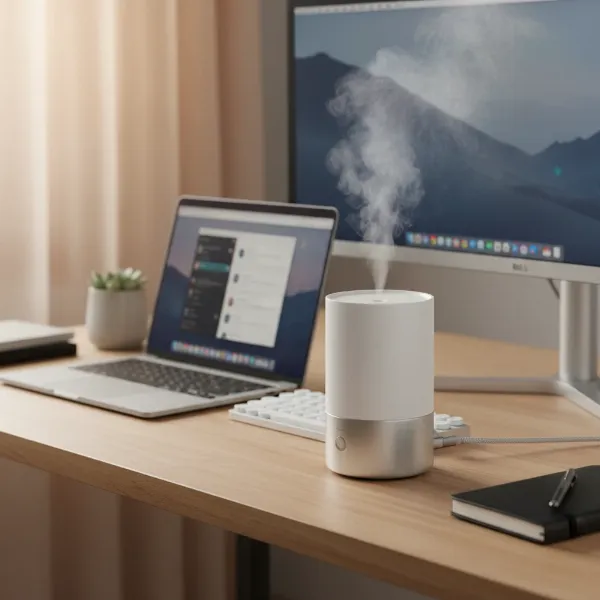
Has dry indoor air left you with cracked skin, a persistent cough, or even restless nights? Humidifiers offer a simple yet effective solution by adding much-needed moisture back into your living space. But with a market full of options, choosing the right one can feel overwhelming. Two popular cool mist technologies dominate the scene: ultrasonic and evaporative humidifiers. Understanding their distinct mechanisms, advantages, and drawbacks is crucial for selecting a device that truly meets your needs and enhances your home’s air quality. This comprehensive guide will break down everything you need to know, helping you make an informed decision for a healthier, more comfortable environment.
The Indispensable Benefits of Optimal Humidity
Why does indoor humidity matter so much? Maintaining an ideal humidity level, typically between 30% and 50%, is vital for both your health and the longevity of your home. Dry air, often prevalent during colder months or with constant air conditioning, can lead to a cascade of uncomfortable issues that extend beyond mere discomfort.
When the air lacks sufficient moisture, your body’s natural defenses can suffer. Common health problems include dry, itchy skin, irritated eyes, chapped lips, and dry nasal passages that can lead to nosebleeds and increased susceptibility to infections. Respiratory conditions like asthma and allergies can be exacerbated, as dry air irritates airways and makes mucus thicker, hindering its natural clearing process. Many people also find their sleep quality improves with adequate humidity, as it can reduce snoring and minimize waking up with a dry throat or mouth. Humidifiers work to counteract these issues by releasing water vapor into the air, soothing irritated membranes, thinning mucus, and helping your skin, hair, and even nails retain their natural moisture. Beyond personal well-being, proper humidity levels also protect wooden furniture, flooring, and musical instruments from cracking or warping due to excessive dryness.
Decoding Humidifier Technologies: Ultrasonic vs. Evaporative
When it comes to cool mist humidifiers, ultrasonic and evaporative models are the most common. While both effectively add moisture to the air, they achieve this through fundamentally different processes, leading to distinct user experiences and maintenance requirements. Understanding these differences is key to making the best choice for your home.
Ultrasonic Humidifiers: The Silent Mist Makers
|
Our Picks for the Best Humidifier in 2026
As an Amazon Associate I earn from qualifying purchases.
|
||
| Num | Product | Action |
|---|---|---|
| 1 | Homvana Humidifiers for Bedroom Home, 3.6 L Cool Mist Top-Fill 34H Super Long Time, Quiet 23dB, Baby Humidifier, Oil Diffuser for Large Room, House, Plant, Nursery, Office, BPA FREE, Ultrasonic (Grey) |

|
| 2 | LEVOIT Humidifiers for Bedroom Large Room Home, (6L) Cool Mist Top Fill Essential Oil Diffuser for Baby & Plants, Smart App & Voice Control, Rapid Humidification & Auto Mode - Quiet Sleep Mode, Gray |
|
| 3 | MegaWise Topfill 7-colour Night light humidifier for Kid bedroom with 3.5L Large Capacity, No leakage Design Fine Mist Output Auto Shutoff, Essential Oil Safe Tank |
|
| 4 | DREO 6L Top Fill Humidifiers for Bedroom, 60H Runtime 28 dB Quiet Supersized Cool Mist Air Humidifiers for Large Room, Baby Nursery, Plant, Indoor, Night Light, Easy to Clean, Precise Humidity Control |
|
| 5 | COO Humidifiers for Bedroom, 2L Tank for Large Room, 30 Hour Runtime, 28dB Quiet Cool Mist Humidifier for Home, Baby Nursery, Plants, Indoor, Office, Easy to Fill & Clean,Night Light and Auto Shut-off |
|
| 6 | Dreo Humidifiers for Bedroom, 4L Top Fill for Large Room, 36H Runtime, 28 dB Quiet Supersized Cool Mist Air Humidifier for Baby Nursery, Plants, Indoor, Night Light, Easy to Clean & Fill, White |
|
| 7 | LEVOIT - Humidifiers for Bedroom - Quiet (3L Water Tank) - Cool Mist/Top Fill/Essential Oil Diffuser/25Watt - Home/Large Room - 360° Nozzle - Rapid Ultrasonic Humidification for Baby Nursery/Plant |
|
| 8 | LEVOIT Top Fill Humidifiers for Bedroom, 2.5L Tank for Large Room, Easy to Fill & Clean, 28dB Quiet Cool Mist Air Humidifier for Home Baby Nursery & Plants, Auto Shut-off for Safety, 25H |
|
| 9 | Dreo Smart Humidifiers for Bedroom, Top Fill 4L Supersized Humidifier Large Room with 28 dB, 36H Runtime, Touch/APP/Voice Control, Nightlight, Cool Mist Humidifiers for Baby, Plants, Indoor, Black |
|
| 10 | DREO Humidifiers for Bedroom, 3L Top Fill 30H & 26dB Quiet Runtime for Large Room, Cool Mist Ultrasonic Humidifier with Humidity Sensor, Night Light for Home, Baby, Nursery, Plants, New Edition |
|
How do ultrasonic humidifiers work their magic? These devices utilize a small, high-frequency vibrating metal diaphragm or plate to transform water into an ultra-fine mist, which is then dispersed into the room without the need for a fan to accelerate evaporation. The vibrations operate at a frequency beyond human hearing, making them exceptionally quiet.
The primary appeal of ultrasonic humidifiers lies in their near-silent operation, making them ideal for bedrooms, nurseries, or offices where noise disruption is a concern. They are also generally energy-efficient, consuming less electricity to produce mist compared to models that use a fan. Furthermore, many ultrasonic units do not require wick filters, potentially saving on recurring filter replacement costs. However, a significant drawback is the potential for “white dust,” a fine powder that settles on surfaces, caused by minerals present in tap water being aerosolized with the mist. This mineral dispersion can also contribute to bacterial growth if the water reservoir is not cleaned regularly. Using distilled or demineralized water is highly recommended to mitigate the white dust issue and reduce the risk of dispersing impurities.
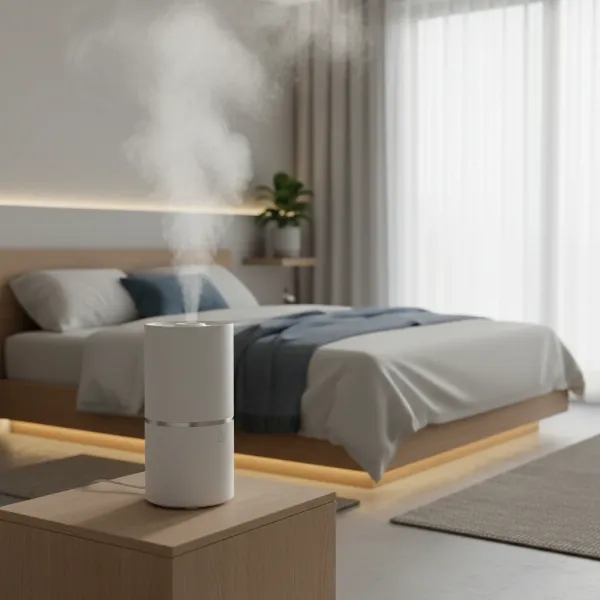 A sleek, modern ultrasonic humidifier emitting a fine, cool mist into a calm bedroom setting, highlighting its quiet operation and aesthetic appeal.
Evaporative Humidifiers: The Natural Air Moisteners
How do evaporative humidifiers function? These units operate on the principle of natural evaporation. A fan draws dry room air over a saturated wick filter, which absorbs water from a reservoir. As air passes through the wet wick, water naturally evaporates into the air as an invisible, clean moisture vapor. This self-regulating process means the humidifier only releases as much moisture as the air can absorb, preventing over-humidification.
Evaporative humidifiers are often favored for their ability to provide a clean moisture output, as the wick filter traps many minerals and impurities found in tap water, preventing “white dust” from being dispersed. They are also inherently self-regulating; as the room’s humidity increases, the rate of evaporation naturally slows down, reducing the risk of over-humidifying a space. However, their reliance on a fan means they are typically noisier than ultrasonic models, which can be a consideration for light sleepers. Evaporative humidifiers also require regular replacement of their wick filters, typically every 1 to 3 months, which adds to the ongoing cost and maintenance effort. They may also consume more energy due to the fan operation.
> “Choosing between an ultrasonic and evaporative humidifier often comes down to personal priorities. If silence is paramount and you’re committed to using distilled water, an ultrasonic unit might be perfect. But for those who prioritize natural, self-regulating humidification and are diligent about filter changes, evaporative models offer a robust solution.” – Dr. Elena Petrova, Environmental Health Specialist
Other Humidifier Types: A Quick Look
While ultrasonic and evaporative models are primary cool mist options, other types of humidifiers exist for different needs. Warm mist humidifiers, also known as vaporizers, boil water to produce steam, which then cools before being released. They are typically quiet and kill most waterborne bacteria due to the boiling process, but they consume more energy and pose a burn risk due to hot water. Central humidifiers are integrated directly into your home’s HVAC system to humidify the entire house, offering whole-home comfort but with higher installation costs. For focused comparisons, however, we primarily consider the cool mist variants.
Detailed Comparison: Ultrasonic vs. Evaporative Humidifiers
To simplify your decision-making process, here’s a breakdown of how ultrasonic and evaporative humidifiers stack up against each other across key features:
| Feature | Ultrasonic Humidifiers | Evaporative Humidifiers |
|---|---|---|
| Noise Level | Very quiet (high-frequency vibrations) | Moderate (fan noise) |
| Energy Efficiency | Generally higher (less electricity) | Moderate (fan requires more power) |
| Mineral Dispersion | High (produces “white dust” from tap water minerals) | Low (wick filter traps minerals) |
| Mist Visibility | Visible cool mist | Invisible moisture output |
| Self-Regulation | No (can over-humidify if not monitored with a humidistat) | Yes (natural evaporation limits output) |
| Filter Requirement | Generally no filter (some have demineralization cartridges) | Yes (wick filter requires regular replacement) |
| Maintenance | Regular cleaning to prevent bacterial buildup; distilled water recommended | Regular filter replacement; cleaning of tank and base |
| Initial Cost | Moderate to higher | Generally lower |
| Recurring Cost | Lower (if no filter); higher if buying distilled water | Higher (due to filter replacements) |
| Portability | Often compact and highly portable | Can be bulkier due to fan and filter |
| Health Concerns | Risk of dispersing minerals/bacteria if not cleaned or using tap water | Less prone to bacterial dispersion with proper filter maintenance |
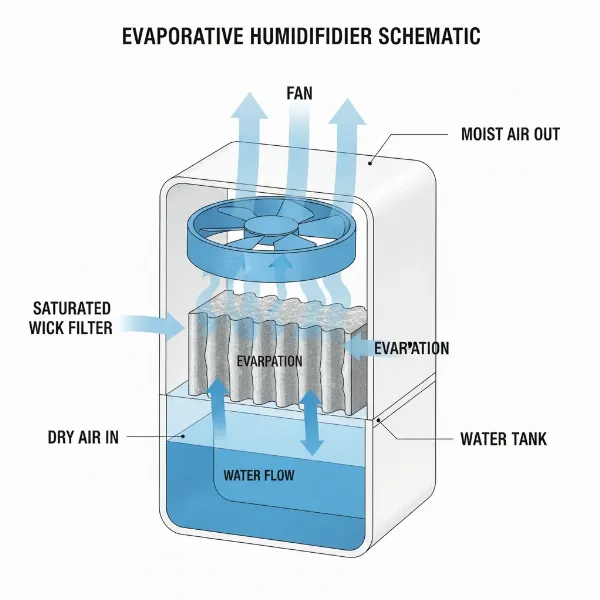 A diagram showing the internal components of an evaporative humidifier, including the fan, wick filter, and water reservoir, with arrows illustrating airflow and evaporation.
Navigating Your Purchase: A Humidifier Buying Guide
Selecting the perfect humidifier involves evaluating your specific needs and preferences. With the distinct characteristics of ultrasonic and evaporative models in mind, consider the following factors before making your purchase:
- Room Size and Area Coverage: Ultrasonic humidifiers are often marketed for smaller to medium rooms due to their fine mist output, though larger models exist. Evaporative humidifiers, especially those with powerful fans, can be highly effective in humidifying larger spaces more evenly, thanks to their self-regulating nature. Always check the manufacturer’s recommended square footage (CADR – Clean Air Delivery Rate for humidity) to ensure it matches your room.
- Noise Tolerance: This is a major differentiator. If you’re highly sensitive to noise, especially for bedrooms or quiet workspaces, an ultrasonic humidifier’s virtually silent operation will be a significant advantage. If a gentle fan hum doesn’t bother you, an evaporative model remains a strong contender.
- Maintenance Commitment: Both types require diligent cleaning, but the nature of that maintenance differs. With an ultrasonic humidifier, you’ll be focused on daily rinsing and regular deep cleaning of the tank and transducer to prevent mineral buildup and bacterial growth. If you choose an evaporative unit, be prepared for consistent filter replacements, typically every 1-3 months, in addition to regular cleaning of the water basin.
- Water Quality and “White Dust” Concerns: If you live in an area with hard tap water and prefer not to buy distilled water, an evaporative humidifier is often a better choice, as its wick filter traps minerals, preventing white dust. For ultrasonic users, investing in distilled water or a demineralization cartridge is essential to avoid mineral residue on furniture and in the air.
- Budget and Ongoing Costs: While evaporative humidifiers often have a lower initial price point, the recurring cost of replacement filters can add up over time. Ultrasonic humidifiers might have a higher upfront cost but generally lower ongoing expenses if you use tap water (and tolerate white dust) or if you factor in the cost of distilled water.
- Health and Respiratory Needs: For individuals with sensitive respiratory systems, an evaporative humidifier might be preferred due to its natural, filter-based humidification that minimizes airborne mineral particles. However, a properly maintained ultrasonic humidifier using distilled water can also be an excellent choice. It’s crucial to consult with a healthcare provider if you have severe respiratory conditions.
Top Picks: Finding the Right Humidifier for You
When considering “top picks” in humidifiers, it’s less about specific brand names (as models frequently update) and more about identifying features that align with your personalized needs.
For those prioritizing ultra-quiet operation, an ultrasonic humidifier with a large tank capacity for extended use and multiple mist settings is ideal. Look for models that offer optional demineralization cartridges if you plan to use tap water, or commit to distilled water for the purest mist. Features like built-in humidistats and auto shut-off are also valuable for convenient humidity control.
If clean, natural moisture without white dust is your main concern, an evaporative humidifier is likely your best bet. Seek out models with high-quality, durable wicks and easy-to-access filters for straightforward replacement. Units with larger water tanks and powerful fans will cover bigger areas more effectively. Some evaporative models also include antimicrobial coatings on their wicks to further inhibit mold and bacterial growth.
Ultimately, the “best” humidifier is the one that fits seamlessly into your lifestyle and effectively addresses your dry air problems. Read reviews that focus on long-term performance and maintenance, as these aspects are crucial for satisfaction.
Essential Humidifier Care: Cleaning and Maintenance
Regardless of whether you choose an ultrasonic or evaporative humidifier, consistent cleaning and maintenance are paramount for both efficiency and health. Neglecting these steps can lead to mineral buildup, reduced performance, and the growth of mold and bacteria, which can then be dispersed into your air, potentially causing respiratory issues.
The importance of regular cleaning cannot be overstated. A humidifier can quickly become a breeding ground for microorganisms if not properly cared for. Experts recommend daily rinsing and refilling, and a more thorough cleaning every few days, especially for cool mist models. To maintain your humidifier effectively:
- Daily Rinse and Refill: Empty the water tank daily, rinse it thoroughly with clean water, and refill with fresh, cool water. For evaporative models, flip your filter if recommended by the manufacturer.
- Weekly Descaling and Disinfection: At least once a week, unplug the unit and disassemble all parts that come into contact with water.
- Descaling: Soak the base and tank in a solution of equal parts white vinegar and water for 30 minutes to an hour to dissolve mineral deposits. Scrub any stubborn buildup with a brush.
- Disinfection: Rinse the vinegar solution thoroughly. Then, for bacterial disinfection, you can use a small amount of bleach solution (e.g., ½ teaspoon of bleach per gallon of water) for a short period (around 10-20 minutes). Always follow manufacturer instructions for specific cleaning solutions and never mix bleach and vinegar, as this creates harmful gas.
- Filter Replacement: For evaporative humidifiers, replace the wick filter every 1-3 months, or sooner if it becomes stiff, discolored, or emits a foul odor. Never try to clean filters with chemicals; simply replace them.
- Use Distilled Water: Especially for ultrasonic humidifiers, using distilled or demineralized water significantly reduces mineral buildup and prevents the infamous “white dust.”
- Monitor Humidity Levels: Use a hygrometer to keep your indoor humidity between 30% and 50%. Over-humidification can promote mold growth on surfaces and in textiles.
- Seasonal Storage: Before storing your humidifier for an extended period, perform a thorough descaling and disinfection, then dry all components completely to prevent mildew.
> “Proper humidifier maintenance is non-negotiable for safe use. Daily water changes and weekly deep cleans, along with using the right water type, are critical to prevent health hazards and ensure your device works as intended.” – Admin, Humidifiert.com
Conclusion
Navigating the world of humidifiers, particularly the choice between ultrasonic and evaporative models, doesn’t have to be daunting. Both offer excellent solutions for combating dry air and improving your indoor environment, but they cater to different priorities. Ultrasonic humidifiers provide whisper-quiet operation and energy efficiency, perfect for undisturbed sleep, though they demand a commitment to distilled water to avoid white dust. Evaporative humidifiers, with their natural, self-regulating moisture output and ability to trap minerals, offer a clean mist experience but come with the ongoing cost and effort of filter replacements and a gentle fan hum.
Ultimately, your best humidifier is the one that aligns with your lifestyle, room size, maintenance preferences, and health considerations. By understanding the core mechanics and distinct pros and cons of each, you are now equipped to choose a humidifier that will bring balanced humidity and a breath of fresh air into your home. Which type will you choose to transform your dry indoor environment into a sanctuary of comfort and well-being?
Frequently Asked Questions
What is “white dust” and how can I avoid it?
“White dust” is a fine powdery residue primarily associated with ultrasonic humidifiers. It occurs when minerals present in tap water are atomized into the air along with the mist. To avoid it, use distilled or demineralized water, or consider a humidifier with a demineralization cartridge. Evaporative humidifiers typically do not produce white dust as their wick filters trap these minerals.
Can humidifiers help with allergies or asthma?
Yes, maintaining optimal indoor humidity (30-50%) can help alleviate symptoms of allergies and asthma by soothing dry airways, thinning mucus, and making breathing more comfortable. However, it is crucial to keep your humidifier meticulously clean to prevent the dispersal of mold, bacteria, or allergens, which could worsen symptoms. Consult a doctor for personalized advice.
How often should I clean my humidifier?
It is recommended to rinse and refill your humidifier’s water tank daily. A more thorough cleaning, including descaling and disinfecting all water-contacting parts, should be performed at least once a week. Evaporative humidifiers also require filter replacement every 1 to 3 months, depending on usage and water hardness.
Is one type of humidifier safer for children or pets?
Cool mist humidifiers, which include both ultrasonic and evaporative types, are generally considered safer than warm mist (steam) humidifiers, as they do not involve boiling water or hot steam, eliminating the risk of burns. However, ensuring any humidifier is placed out of reach and kept immaculately clean is vital to prevent bacterial growth and accidental spills, regardless of the type.