As a seasoned technician with over a decade in the humidifier industry, I understand that a healthy living environment often hinges on the right humidity balance. Humidifiers are vital tools in achieving this, improving air quality and protecting your health. However, when your trusty humidifier starts emitting an unwelcome loud buzzing noise, it can quickly turn from a source of comfort to a cause for concern. This guide will walk you through the common culprits behind a noisy humidifier and empower you with actionable steps to restore its quiet, efficient operation.
The Unexpected Hum: Why Your Humidifier Might Be Buzzing
Maintaining optimal indoor humidity levels, typically between 30% and 50%, is crucial for both your well-being and your home. Dry air can lead to a host of problems, from irritated skin and respiratory issues to cracked wooden furniture and static electricity. A well-functioning humidifier combats these issues by adding moisture back into the air, creating a more comfortable and healthier environment. When your humidifier is working correctly, its presence should be almost unnoticeable, quietly misting away.
However, a sudden, loud buzzing noise signals that something is amiss. This buzzing isn’t just an annoyance; it’s often your humidifier’s way of telling you that a component is struggling or requires attention. Ignoring these sounds can lead to diminished performance, increased energy consumption, and potentially, a complete breakdown of the unit. Pinpointing the exact cause of the buzz is the first step towards a peaceful, properly humidified space.
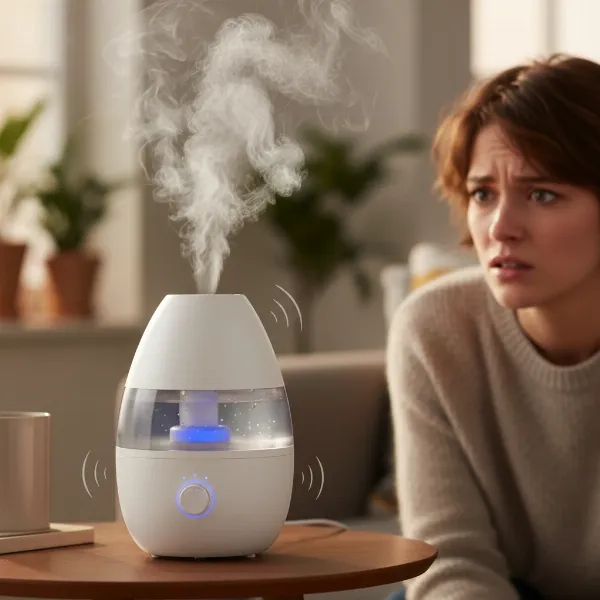 A close-up of a humidifier emitting a subtle buzzing sound, with water vapor visible, indicating a technical issue.
Decoding the Buzz: Common Causes Behind Humidifier Noises
Understanding the source of the buzzing noise in your humidifier is key to resolving the problem. While these machines are designed for quiet operation, several factors can disrupt their tranquility, often related to water quality, mechanical integrity, or electrical components.
One of the most frequent culprits, especially in ultrasonic humidifiers, is incorrect water levels. If the water reservoir is too low, the ultrasonic transducer, which vibrates to create mist, may not be fully submerged. This can cause it to overheat and produce a distinct high-pitched whine or buzzing sound as it struggles to function. Conversely, if the water level is too high, it might lead to excessive splashing or gurgling noises as water interferes with internal components. Always adhere to your manufacturer’s recommended water levels to ensure the transducer operates optimally and prevent potential damage.
Mineral buildup, also known as scale, is another pervasive issue. Hard water contains minerals that, over time, can accumulate on various parts of your humidifier, including the transducer, heating element (in warm mist units), or even the fan blades. This calcification can impede the normal function of these components. For instance, a scaled-up transducer in an ultrasonic humidifier won’t vibrate efficiently, leading to buzzing, while mineral deposits on a fan can throw it off balance, causing vibration and noise. Clogged nozzles due to mineral deposits can also result in whistling sounds as mist struggles to escape.
> “Many buzzing noises stem directly from overlooked maintenance. Mineral buildup is a silent killer of efficiency and a loud instigator of noise.” – [Your Name], Admin of Humidifiert.com
Fan or motor malfunctions are common mechanical causes of buzzing, especially in evaporative and some ultrasonic models that use fans to disperse mist. A fan motor with worn bearings can create a humming or buzzing sound, which intensifies as the motor struggles. Additionally, if the fan blades are dirty, bent, or obstructed by debris, they can become unbalanced, leading to vibrations that manifest as a loud buzz against the humidifier’s casing. These issues often worsen with prolonged use and lack of cleaning.
Beyond mechanical issues, electrical component failures can also be a source of noise. In whole-house humidifiers connected to your HVAC system, a buzzing sound could indicate a problem with the solenoid valve, which controls water flow. In any type of humidifier, internal transformers or capacitors on the control board can sometimes buzz. A “blown” or failing capacitor, for example, might cause a high-pitched coil whine or buzzing as it struggles to regulate power. If the buzzing sounds distinctly electrical or is accompanied by burning smells, it’s crucial to unplug the unit immediately.
Finally, improper placement and vibrations can amplify otherwise minor internal noises. Placing your humidifier too close to a wall, on an uneven surface, or on a surface that easily vibrates (like a thin tabletop) can cause the sound to bounce back and intensify, making even a slight internal hum seem like a loud buzz. Ensure your humidifier is on a flat, stable surface with adequate space around it for proper airflow and sound dissipation.
Understanding Humidifier Types and Their Noise Tendencies
Different types of humidifiers operate on distinct principles, which inherently affect their typical noise profiles and how they might develop a buzzing sound. Recognizing your humidifier type can often guide your troubleshooting process.
Ultrasonic humidifiers are generally celebrated for their whisper-quiet operation. They use a rapidly vibrating ceramic diaphragm (transducer) to produce a fine, cool mist. While their core operation is silent, they are particularly susceptible to buzzing when water levels are incorrect or the transducer plate becomes caked with mineral deposits. A lack of proper water submersion or a compromised transducer can lead to a high-pitched buzz as the component strains.
Evaporative humidifiers work by drawing dry air through a moist wick filter using a fan. The fan is the primary source of noise for these units, typically producing a consistent white-noise-like hum. A loud buzzing in an evaporative humidifier is usually indicative of a problem with the fan motor itself—such as worn bearings, an unbalanced blade, or an obstruction—rather than issues related to water level or mineral buildup on the wick (though a dirty wick can reduce efficiency).
Warm mist humidifiers boil water to create a sterile, warm vapor. The most common sounds from these units are the gentle gurgling of boiling water and occasional steaming noises. A distinct buzzing here might point towards an electrical issue, such as a faulty heating element struggling or a problem with the internal wiring or transformer, rather than mechanical fan noise. Mineral buildup on the heating element can also cause it to work harder, potentially leading to a hum.
Whole-house humidifiers are integrated into your home’s HVAC system, adding moisture to the entire house. Because they are part of a larger system, buzzing noises can originate from various components: the humidifier’s own water valve solenoid, a malfunctioning damper motor, or even vibrations within the air ducts if the unit isn’t properly installed or isolated. Electrical issues within the control board or transformer are also potential culprits, much like with standalone units.
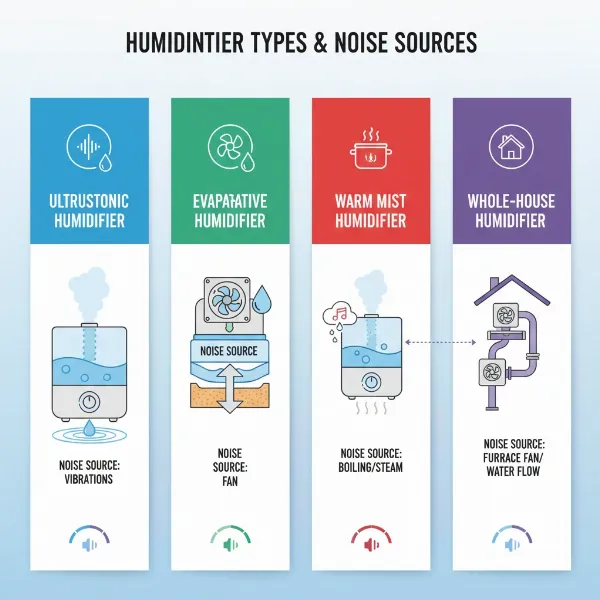 Illustrations of different humidifier types with visual cues indicating their typical noise sources (e.g., fan, mist, boiling water).
Comparative Overview of Humidifier Noise Factors
|
Our Picks for the Best Humidifier in 2026
As an Amazon Associate I earn from qualifying purchases.
|
||
| Num | Product | Action |
|---|---|---|
| 1 | LEVOIT Humidifiers for Bedroom Large Room Home, (6L) Cool Mist Top Fill Essential Oil Diffuser for Baby & Plants, Smart App & Voice Control, Rapid Humidification & Auto Mode - Quiet Sleep Mode, Gray |

|
| 2 | MegaWise Topfill 7-colour Night light humidifier for Kid bedroom with 3.5L Large Capacity, No leakage Design Fine Mist Output Auto Shutoff, Essential Oil Safe Tank |
|
| 3 | Dreo Humidifiers for Bedroom, 4L Top Fill for Large Room, 36H Runtime, 28 dB Quiet Supersized Cool Mist Air Humidifier for Baby Nursery, Plants, Indoor, Night Light, Easy to Clean & Fill, White |
|
| 4 | Homvana Humidifiers for Bedroom Home, 3.6 L Cool Mist Top-Fill 34H Super Long Time, Quiet 23dB, Baby Humidifier, Oil Diffuser for Large Room, House, Plant, Nursery, Office, BPA FREE, Ultrasonic (Grey) |
|
| 5 | LEVOIT - Humidifiers for Bedroom - Quiet (3L Water Tank) - Cool Mist/Top Fill/Essential Oil Diffuser/25Watt - Home/Large Room - 360° Nozzle - Rapid Ultrasonic Humidification for Baby Nursery/Plant |
|
| 6 | LEVOIT Top Fill Humidifiers for Bedroom, 2.5L Tank for Large Room, Easy to Fill & Clean, 28dB Quiet Cool Mist Air Humidifier for Home Baby Nursery & Plants, Auto Shut-off for Safety, 25H |
|
| 7 | DREO 6L Top Fill Humidifiers for Bedroom, 60H Runtime 28 dB Quiet Supersized Cool Mist Air Humidifiers for Large Room, Baby Nursery, Plant, Indoor, Night Light, Easy to Clean, Precise Humidity Control |
|
| 8 | DREO Humidifiers for Bedroom, 3L Top Fill 30H & 26dB Quiet Runtime for Large Room, Cool Mist Ultrasonic Humidifier with Humidity Sensor, Night Light for Home, Baby, Nursery, Plants, New Edition |
|
| 9 | Dreo Smart Humidifiers for Bedroom, Top Fill 4L Supersized Humidifier Large Room with 28 dB, 36H Runtime, Touch/APP/Voice Control, Nightlight, Cool Mist Humidifiers for Baby, Plants, Indoor, Black |
|
| 10 | COO Humidifiers for Bedroom, 2L Tank for Large Room, 30 Hour Runtime, 28dB Quiet Cool Mist Humidifier for Home, Baby Nursery, Plants, Indoor, Office, Easy to Fill & Clean,Night Light and Auto Shut-off |
|
| Feature | Ultrasonic Humidifier | Evaporative Humidifier | Warm Mist Humidifier | Whole-House Humidifier |
|---|---|---|---|---|
| Typical Noise Profile | Silent mist, can buzz | Fan hum, gurgle | Boiling, gentle hum | Integrated, can buzz |
| Common Buzzing Causes | Low water, transducer scale | Motor issues, fan imbalance | Electrical, faulty components | Solenoid, ducts, electrical |
| Maintenance for Quiet | Regular cleaning, distilled water | Filter/wick replacement, motor check | Descaling, electrical check | Professional inspection |
| Cost to Maintain | Medium | Low to Medium | Medium | High |
Troubleshooting Your Buzzing Humidifier: A Step-by-Step Approach
When your humidifier starts buzzing, don’t panic. Many issues can be resolved with some systematic troubleshooting. Always ensure the unit is unplugged before performing any internal inspections or cleaning for safety.
Start with initial checks concerning water and placement. First, verify that the water tank is filled to the correct level as indicated by the manufacturer. For ultrasonic units, ensure the transducer is adequately submerged. If you’re using tap water, consider switching to distilled water for a few days to see if mineral buildup is contributing to the noise. Next, assess the humidifier’s location. Is it on a flat, stable surface? Is it too close to a wall or other objects that might amplify vibrations? Try moving it to a different, more open spot to rule out external resonance.
The next crucial step is deep cleaning and descaling. Mineral buildup is a leading cause of various humidifier problems, including buzzing. Unplug your unit and disassemble it according to the manual. For ultrasonic units, pay close attention to the transducer and the water basin. Use a descaling solution (like a 50/50 white vinegar and water mix) to soak any components with visible mineral deposits. Gently scrub away any softened scale with a soft brush. For evaporative units, inspect and clean the water basin and replace the wicking filter if it’s hardened with minerals. For warm mist units, clean the heating element thoroughly. Regular cleaning can prevent future buzzing and extend the life of your appliance.
Perform mechanical inspections on fans, motors, and loose parts. If your humidifier has a fan, carefully check its blades for any visible dirt, debris, or damage that could be causing imbalance. Gently spin the fan by hand to feel for any resistance or grinding. If the fan or motor feels stiff, a small amount of silicone-based lubricant (ensure it’s safe for plastics if applicable) might help quiet a binding shaft, as observed in some units struggling with internal friction. Also, check for any loose screws, panels, or components that might be vibrating against each other, tightening them as needed.
For electrical checks, proceed with extreme caution and only if you are comfortable and it’s safe to do so. If the buzzing seems electrical, resembling a high-pitched whine or a crackle, it could indicate a failing capacitor, transformer, or other circuit board component. Visually inspect the circuit board for any swollen or leaking capacitors (often small cylindrical components). If you identify such issues, or if there’s a burning smell, do not attempt DIY repair. This is a significant safety hazard.
Finally, know when to seek professional help or consider replacement. If, after thorough cleaning and inspection, the buzzing persists, or if you suspect a serious electrical or motor malfunction, it’s often best to consult a qualified technician. For whole-house humidifiers, professional HVAC service is usually required. If your humidifier is old, has visible damage, or is repeatedly causing problems, investing in a new, more reliable unit might be a more cost-effective and safer solution in the long run.
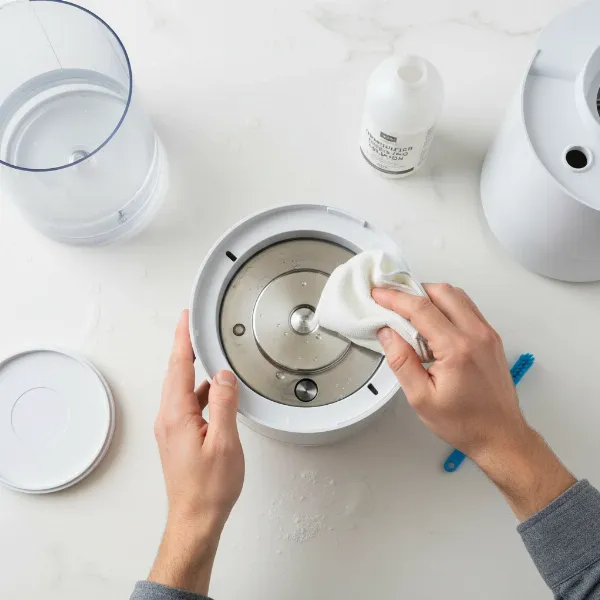 A person carefully cleaning the base of an ultrasonic humidifier with a cloth and a descaling solution, focusing on the transducer.
Ensuring Quiet Operation: Best Practices for Humidifier Maintenance
Preventive maintenance is the cornerstone of keeping your humidifier running quietly and efficiently for years. A proactive approach not only fends off annoying buzzing noises but also safeguards your investment and ensures you continue to enjoy the health benefits of properly humidified air.
The importance of regular care cannot be overstated. Humidifiers, by their very nature, deal with water, which makes them susceptible to mineral buildup and, if neglected, mold and bacterial growth. Consistent cleaning prevents these issues from escalating into performance problems and loud noises. Think of it as routine care for an essential household appliance, just like cleaning your coffee maker or vacuum.
A detailed cleaning routine should be performed at least once a week, or more frequently if you have hard water or use your humidifier continuously. Begin by unplugging the unit and emptying all water from the tank and basin. Disassemble the removable parts. Prepare a descaling solution, typically white vinegar, and soak components like the water tank, base, and especially the transducer (for ultrasonic units) or heating element (for warm mist units) for at least 30 minutes to an hour. Use a soft brush or sponge to gently scrub away any loosened mineral deposits. For evaporative humidifiers, regularly replace the wicking filter according to the manufacturer’s guidelines, as clogged filters reduce efficiency and can strain the fan. Rinse all parts thoroughly to remove any vinegar residue before reassembling.
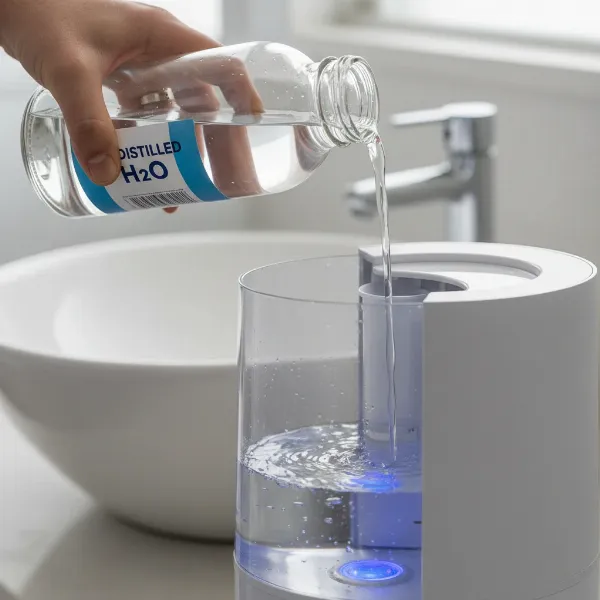 A hand pouring distilled water into a humidifier tank, emphasizing the use of proper water type for maintenance.
Using the right water plays a significant role in preventing mineral buildup and, consequently, buzzing noises. While tap water is convenient, its mineral content is the primary cause of scale. Opting for distilled or demineralized water can drastically reduce the frequency of descaling required and extend the life of your humidifier’s components, especially the delicate ultrasonic transducer. If distilled water isn’t feasible, ensure your cleaning routine is extra diligent.
Optimal placement strategies are simple yet effective in mitigating noise. Always place your humidifier on a sturdy, level surface that can absorb vibrations rather than amplify them. Avoid placing it directly on carpet, as this can obstruct airflow. Leave a few inches of space around the unit, especially from walls or large furniture, to allow for proper air circulation and prevent sound from echoing back, making the unit seem louder than it is.
Finally, integrate routine component checks into your maintenance schedule. Every few weeks, quickly inspect the fan blades for dust or debris (if accessible), check for any loose parts, and give the power cord a quick visual inspection for fraying. Catching these minor issues early can prevent them from developing into major, noisy problems down the line. A little attention goes a long way in ensuring your humidifier remains a silent workhorse.
Conclusion
A loud buzzing noise from your humidifier is more than just an annoyance; it’s a clear signal that something needs your attention. From incorrect water levels and stubborn mineral buildup to failing electrical components or struggling motors, understanding the root cause is the first step towards a quieter, more efficient unit. By systematically troubleshooting and adopting a routine of diligent cleaning and maintenance, you can often resolve these issues yourself, extending the lifespan of your humidifier and ensuring it continues to provide the clean, comfortable air your home deserves. Don’t let a buzz disrupt your peace—take action to restore your humidifier’s quiet operation and enjoy optimal humidity all year round.
What’s the one maintenance step you’re going to implement today to keep your humidifier humming (quietly)?
Frequently Asked Questions
Can I ignore a buzzing noise from my humidifier?
Ignoring a buzzing noise from your humidifier is not recommended. While it might seem minor, it often indicates an underlying issue like mineral buildup, a struggling motor, or an electrical fault. Continued operation with a problem can lead to further damage, decreased efficiency, or even a complete breakdown of the unit. Addressing the noise promptly can save you from more costly repairs or replacements later.
Does using distilled water prevent humidifier buzzing?
Using distilled water can significantly reduce the likelihood of buzzing noises, especially in ultrasonic humidifiers. Distilled water lacks the minerals found in tap water, which are the primary cause of scale buildup on transducers, heating elements, and other components. By minimizing mineral deposits, distilled water helps maintain optimal function and prevents the strain that can lead to buzzing.
How often should I clean my humidifier to prevent noise?
To prevent buzzing and other operational noises, it’s generally recommended to clean your humidifier at least once a week, especially if you use it frequently or have hard water. A thorough descaling and cleaning of the water tank, base, and any internal components like the transducer or heating element will prevent mineral buildup and maintain optimal performance.
Can a humidifier’s placement affect its noise level?
Yes, a humidifier’s placement can significantly impact its perceived noise level. Placing the unit on an uneven or vibrating surface can amplify internal sounds, making them seem louder. Similarly, positioning it too close to a wall or large objects can cause sound waves to bounce back, increasing the audible buzz. Always place your humidifier on a stable, flat surface with adequate space around it.
Is a buzzing sound always a sign of a serious problem?
Not necessarily, but it warrants investigation. A faint buzz could be due to minor vibrations or very early stages of mineral buildup. However, a loud, persistent, or increasing buzz often points to a more significant issue, such as a failing motor, an electrical component problem, or significant obstruction. It’s always best to troubleshoot to identify the cause before it escalates.
What if my humidifier is still buzzing after cleaning and troubleshooting?
If your humidifier continues to buzz loudly after you’ve thoroughly cleaned it, checked water levels, adjusted placement, and inspected for obvious mechanical issues, it might indicate a more complex internal problem. This could include a faulty motor, a failing electrical component on the circuit board, or other irreparable damage. At this point, it’s advisable to consult a professional technician or consider replacing the unit, especially if it’s an older model.