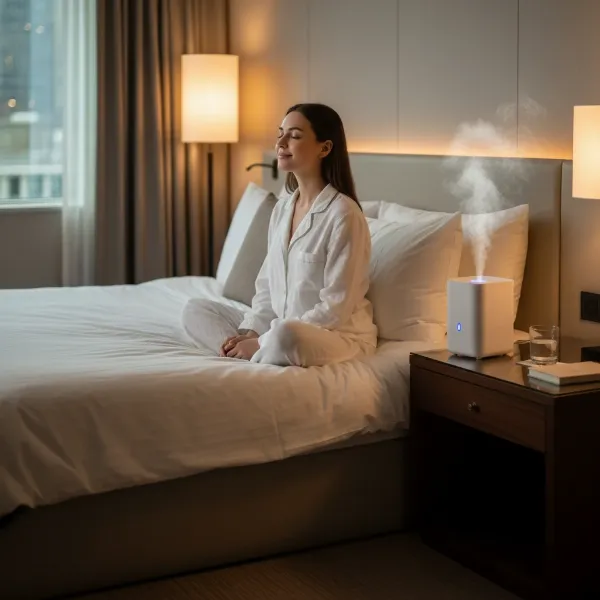
The constant chore of refilling your humidifier can sometimes feel endless, interrupting the very comfort it aims to provide. While humidifiers are indispensable for combating dry indoor air, supporting respiratory health, and protecting household furnishings, their water tanks seem to empty far too quickly. Finding ways to extend the time between refills not only offers greater convenience but also ensures your unit operates more efficiently and effectively. This guide will walk you through practical strategies to maximize your humidifier’s water longevity, transforming it from a thirsty appliance into a low-maintenance ally against dry air.
Understanding Humidifier Water Usage: Why It Matters
Efficient water use in your humidifier is crucial for several reasons beyond just convenience. Frequent refilling can be a hassle, but more importantly, optimizing water consumption contributes to the overall health and performance of your unit. Factors such as the ambient humidity in your home, the size of the room, the specific type of humidifier you own, and even the room’s temperature can significantly influence how quickly the water evaporates. For instance, a humidifier operating in a very dry, warm environment will naturally deplete its water supply faster than one in a moderately humid, cooler setting. Understanding these underlying dynamics is the first step toward smart water management.
How Different Humidifier Types Affect Water Longevity
The design of your humidifier plays a critical role in how it processes and consumes water. Each type has a unique mechanism that dictates its water efficiency and, consequently, how often you’ll need to refill it.
- Ultrasonic Humidifiers use high-frequency vibrations to create a fine mist from water. While generally quiet and efficient, their mist output can sometimes lead to “white dust” if tap water with high mineral content is used, which can impact performance over time.
- Evaporative Humidifiers draw water from a reservoir through a wick filter, where a fan blows air across the moistened filter, causing water to evaporate naturally. Their water consumption directly correlates with the dryness of the air; drier air leads to faster evaporation. The efficiency of the wick is vital for optimal performance.
- Warm Mist Humidifiers boil water to produce a sterile, warm steam. This process tends to consume water faster due to the energy required to heat and convert water into vapor. However, they offer the benefit of killing airborne germs and preventing the dispersal of mineral dust.
- Whole-House Humidifiers are integrated into your home’s HVAC system. They typically draw water directly from your plumbing, meaning they don’t require manual refilling of a tank. While they use a continuous supply, they are often the most efficient for maintaining consistent humidity across an entire living space without constant user intervention.
Each type presents different considerations for extending water life, emphasizing that a tailored approach is often best.
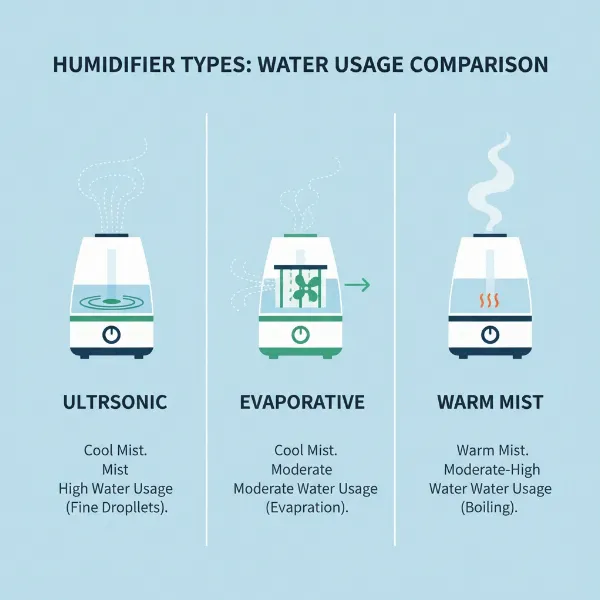 Visual comparison of ultrasonic, evaporative, and warm mist humidifier types and their efficiency.
Comparison of Humidifier Water Efficiency
Understanding how each humidifier type manages water can guide your expectations and help you choose the best strategies for water longevity. This table provides a comparative overview:
| Feature | Ultrasonic | Evaporative | Warm Mist | Whole-House |
|---|---|---|---|---|
| Water Consumption | Moderate | Moderate to High | High | Continuous (Low Manual Refill) |
| Refill Frequency | Less frequent | More frequent | More frequent | Almost none |
| Ideal for Water Saving | Good (with proper water) | Depends on ambient humidity | Less ideal | Best |
| Main Factor Influencing Longevity | Water quality, tank size | Filter condition, ambient air | Boiling process, tank size | System integration |
Practical Strategies to Make Your Humidifier Water Last Longer
Making your humidifier water last longer involves a combination of smart setup, diligent maintenance, and informed usage habits. Implementing these strategies can significantly reduce how often you need to refill your unit.
Use the Right Water
|
Our Picks for the Best Humidifier in 2026
As an Amazon Associate I earn from qualifying purchases.
|
||
| Num | Product | Action |
|---|---|---|
| 1 | Dreo Smart Humidifiers for Bedroom, Top Fill 4L Supersized Humidifier Large Room with 28 dB, 36H Runtime, Touch/APP/Voice Control, Nightlight, Cool Mist Humidifiers for Baby, Plants, Indoor, Black |

|
| 2 | LEVOIT Humidifiers for Bedroom Large Room Home, (6L) Cool Mist Top Fill Essential Oil Diffuser for Baby & Plants, Smart App & Voice Control, Rapid Humidification & Auto Mode - Quiet Sleep Mode, Gray |
|
| 3 | DREO Humidifiers for Bedroom, 3L Top Fill 30H & 26dB Quiet Runtime for Large Room, Cool Mist Ultrasonic Humidifier with Humidity Sensor, Night Light for Home, Baby, Nursery, Plants, New Edition |
|
| 4 | Dreo Humidifiers for Bedroom, 4L Top Fill for Large Room, 36H Runtime, 28 dB Quiet Supersized Cool Mist Air Humidifier for Baby Nursery, Plants, Indoor, Night Light, Easy to Clean & Fill, White |
|
| 5 | LEVOIT Classic 160 Top-Fill Ultrasonic Cool Mist Humidifier, Super Easy to Fill and Clean, Quiet Operation for Bedroom Home Baby & Plants, Auto Shut-off for Safety, 360° Rotating Nozzle, 2.5L, Black |
|
| 6 | LEVOIT Humidifiers for Bedroom Home, Smart Warm and Cool Mist Air Humidifier for Large Room, Auto Customized Humidity, Fast Symptom Relief, Easy Top Fill, Essential Oil, Quiet, OasisMist4.5L, White |
|
| 7 | Homvana Humidifiers for Bedroom Home, 3.6 L Cool Mist Top-Fill 34H Super Long Time, Quiet 23dB, Baby Humidifier, Oil Diffuser for Large Room, House, Plant, Nursery, Office, BPA FREE, Ultrasonic (Grey) |
|
| 8 | LEVOIT - Humidifiers for Bedroom - Quiet (3L Water Tank) - Cool Mist/Top Fill/Essential Oil Diffuser/25Watt - Home/Large Room - 360° Nozzle - Rapid Ultrasonic Humidification for Baby Nursery/Plant |
|
| 9 | LEVOIT Top Fill Humidifiers for Bedroom, 2.5L Tank for Large Room, Easy to Fill & Clean, 28dB Quiet Cool Mist Air Humidifier for Home Baby Nursery & Plants, Auto Shut-off for Safety, 25H |
|
| 10 | LEVOIT OasisMist 1000S (10L) Smart Humidifier for Home Large Room Bedroom, Last 100 Hours Suitable for Indoor Plant, Cover up to 600ft², Easy Top Fill, Remoter & Voice Control, Auto Mode, Quiet, White |
|
One of the most impactful changes you can make is switching from tap water to distilled or demineralized water. Tap water contains minerals that, when dispersed into the air or left behind in the tank, can lead to a white dust coating on surfaces and substantial mineral buildup within your humidifier. This buildup can clog components, reduce efficiency, and shorten the lifespan of the unit, indirectly increasing water consumption as the humidifier works harder to achieve the desired output. Distilled or demineralized water is free of these minerals, ensuring cleaner operation and maintaining the unit’s peak efficiency.
Regular Cleaning and Maintenance
A clean humidifier is an efficient humidifier. Mineral deposits, mold, and bacteria can accumulate in the tank and base, hindering its ability to disperse moisture effectively.
- Daily Water Change: Even if the reservoir isn’t empty, it’s advisable to empty any remaining water daily to prevent bacterial growth. Refill with fresh water to ensure optimal performance.
- Weekly Deep Clean: At least once a week, unplug your humidifier, empty the tank, and clean all components. A solution of equal parts white vinegar and water can be used to remove mineral buildup. Soak the base and tank, then scrub any stubborn spots with a brush. Rinse thoroughly before refilling. This routine prevents clogs and maintains mist output, ensuring water is used efficiently.
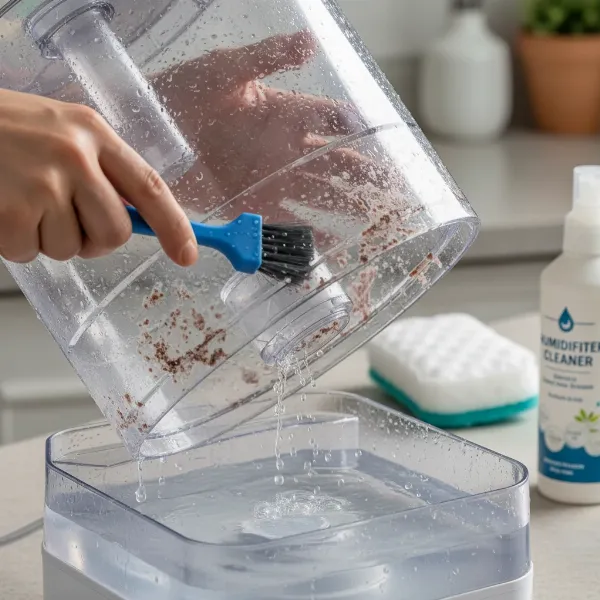 Person cleaning a humidifier tank and base with a brush to remove mineral buildup and improve efficiency.
 - Filter/Wick Replacement: For evaporative humidifiers, regularly check and replace the wick or filter according to the manufacturer’s guidelines. A clogged or hardened filter cannot absorb water effectively, forcing the humidifier to work harder and potentially consume more water to reach the desired humidity level.
Optimize Room Environment
The environment where your humidifier operates profoundly affects its water usage.
- Seal Your Space: Close windows and doors in the room where the humidifier is running. Leaky windows or open doors allow humidified air to escape, causing the unit to run longer and deplete its water supply more rapidly to maintain the target humidity.
- Monitor Humidity Levels: Use a hygrometer to monitor your indoor humidity. The U.S. Environmental Protection Agency recommends maintaining indoor humidity levels between 30% and 50%. Setting your humidifier to maintain humidity within this optimal range prevents over-humidification, which is not only unhealthy but also wasteful of water and energy.
- Strategic Placement: Place your humidifier in a central location within the room, away from direct sunlight, heating vents, or drafts. These elements can cause water to evaporate too quickly or draw humid air away before it can effectively disperse, leading to increased water consumption.
Choose the Right Size & Adjust Settings
Selecting a humidifier appropriate for your room size is crucial for efficiency. An undersized unit will struggle to humidify a large room, running continuously and emptying its tank quickly. Conversely, an oversized unit might over-humidify. Look for humidifiers with features like:
- Adjustable Mist Settings: Allowing you to reduce the output when less humidity is needed.
- Built-in Hygrometer/Auto Mode: These features automatically adjust the humidifier’s operation to maintain a set humidity level, preventing unnecessary water use.
- Larger Reservoir: A straightforward solution to reduce refill frequency, larger tanks simply hold more water, extending run times.
Top Picks: Humidifiers Designed for Longer Run Times
While specific brand recommendations might change, certain features consistently contribute to longer run times and reduced refilling efforts. When looking for a humidifier that makes its water last longer, prioritize models with:
- Large Water Tanks: This is the most direct way to ensure extended operation without constant refills. Many models now offer tanks that can run for 24-48 hours on a single fill.
- Integrated Hygrometers and Auto Modes: These smart features allow the humidifier to automatically adjust its output to maintain a preset humidity level, preventing over-humidification and conserving water by only running when necessary.
- Energy-Efficient Designs: Models that utilize less power to achieve humidification often do so by optimizing water use. Evaporative humidifiers, for example, can be very efficient by utilizing natural evaporation processes.
- Whole-House System Options: For those with central HVAC, a whole-house humidifier eliminates manual refilling altogether and efficiently humidifies the entire home.
Look for humidifiers that boast extended run times in their specifications and receive positive reviews for their efficiency and ease of maintenance.
Maintaining Your Humidifier for Peak Water Efficiency
Beyond general cleaning, specific maintenance practices directly impact how efficiently your humidifier uses water and, by extension, how long its water supply lasts. Neglecting these steps can lead to decreased performance and increased water consumption.
- Descaling: Mineral buildup (limescale) from tap water can coat heating elements, ultrasonic diaphragms, and filters. This buildup forces the humidifier to work harder, consuming more energy and water to produce the desired output. Regular descaling with vinegar, as mentioned earlier, is vital.
- Sanitizing: While not directly related to water longevity, sanitizing prevents the growth of mold and bacteria. These contaminants can reduce the quality of the mist and, in severe cases, clog components, indirectly affecting efficiency. A dilute bleach solution (per manufacturer instructions) can be used for sanitization after descaling.
- Filter Health: For evaporative humidifiers, the wick filter is central to water efficiency. A clean, pliable filter allows for optimal water absorption and evaporation. A stiff, mineral-laden filter will struggle, causing the unit to draw more water from the tank to compensate or simply fail to humidify effectively. Follow replacement schedules rigorously.
- Addressing White Dust: If you still experience white dust even with proper water and cleaning, it might indicate an issue with your unit’s filter or a need for more frequent deep cleaning. This dust is pulverized minerals, meaning your humidifier isn’t using the water as cleanly as it could.
By meticulously following these maintenance tips, you not only extend the life of your humidifier but also ensure that every drop of water in its tank is utilized as effectively as possible.
Conclusion
Extending the life of your humidifier’s water isn’t just about saving a few trips to the sink; it’s about optimizing your unit’s performance, ensuring healthier indoor air, and making your daily routine a little smoother. By understanding how different humidifier types function, choosing distilled water, maintaining a rigorous cleaning schedule, and strategically placing your unit, you can significantly reduce refill frequency. These simple yet effective strategies transform your humidifier into a more efficient, less demanding appliance, allowing you to enjoy consistent comfort with minimal effort. What one change will you implement today to make your humidifier water last longer?
Frequently Asked Questions
Can I use tap water to make my humidifier water last longer?
While you can use tap water, it’s not recommended for extending water life or humidifier health. Tap water’s mineral content leads to buildup and “white dust,” reducing efficiency and potentially shortening the unit’s lifespan, which can indirectly lead to more frequent refilling as the humidifier struggles to function.
Does room size affect how long humidifier water lasts?
Yes, absolutely. A humidifier that is too small for a large room will have to run continuously at a high setting to try and reach the desired humidity, rapidly depleting its water supply. Matching the humidifier’s capacity to your room size ensures efficient operation and longer water life.
How often should I clean my humidifier to improve water longevity?
For optimal water longevity and hygiene, you should rinse and refill your humidifier’s tank daily. A more thorough deep cleaning, including descaling and sanitizing components, should be performed at least once a week to prevent mineral buildup and bacterial growth that can hinder efficiency.
Are there humidifiers that automatically refill?
Yes, whole-house humidifiers integrate directly into your home’s plumbing system, providing a continuous water supply and eliminating the need for manual refilling of a tank. Some portable units may also have options for connecting to an external water source, though this is less common.
What is the ideal humidity level to conserve water?
Maintaining indoor humidity levels between 30% and 50% is generally recommended for comfort and health. Operating your humidifier within this range, ideally with a built-in hygrometer or auto-mode, helps conserve water by preventing over-humidification and ensuring the unit only runs when necessary.