The comforting hum of a humidifier can be a welcome sound, especially during dry seasons when parched air can lead to cracked skin, irritated sinuses, and a host of respiratory discomforts. We rely on these devices to infuse our homes with much-needed moisture, transforming dry, stale air into a more pleasant and healthful environment. However, this seemingly beneficial appliance holds a hidden danger if not properly maintained. A neglected humidifier can quickly become a breeding ground for harmful microorganisms, transforming its soothing mist into a vector for serious health issues. Ignoring the simple task of regular cleaning can inadvertently expose you and your loved ones to respiratory ailments, the most concerning of which is a condition known as humidifier lung.
Benefits of Humidifiers: A Double-Edged Sword
Maintaining optimal indoor humidity levels, typically between 30% and 50%, offers significant health and comfort advantages. Proper humidity can soothe dry skin, alleviate congestion, reduce static electricity, and even protect wooden furniture and musical instruments from drying out. For many, a humidifier is an essential tool in combating the harsh effects of dry air, improving sleep quality, and mitigating symptoms of common colds or seasonal allergies.
However, the very environment that makes humidifiers effective – a consistently moist water reservoir – also creates an ideal breeding ground for microscopic threats. When neglected, the water tank can quickly accumulate bacteria, fungi, mold spores, and mineral deposits. These contaminants, once aerosolized, are then dispersed into your home’s air, turning what should be a source of relief into a silent threat. This unexpected turn highlights why understanding the risks and proper maintenance is not just a recommendation, but a critical necessity for any humidifier owner.
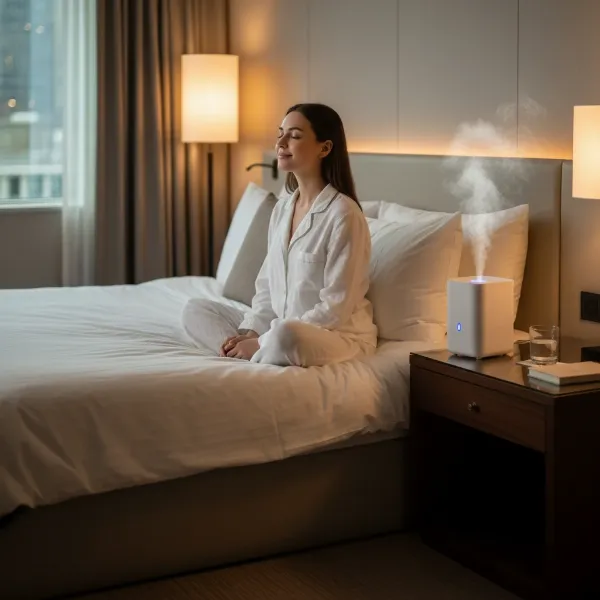
 Humidifier mist revealing microscopic dangers like bacteria and fungi, illustrating the hidden risks.
Decoding Humidifier Lung: Hypersensitivity Pneumonitis Explained
So, what exactly happens when a humidifier turns from helpful to harmful? The most severe consequence of inhaling contaminated mist is a condition commonly referred to as “humidifier lung.” This isn’t just a catchy name; it’s a specific form of hypersensitivity pneumonitis, a serious inflammatory reaction that occurs deep within the lungs. It is triggered when sensitive individuals repeatedly inhale organic dust, bacteria, or fungi that have proliferated in a dirty humidifier’s water tank and are then dispersed into the air.
The root cause lies in the stagnant, often untreated, water within the humidifier. Bacteria like Legionella and various molds thrive in these warm, moist environments. When these microorganisms become airborne particles within the humidifier’s mist, they can reach the alveoli, the tiny air sacs in your lungs. For individuals susceptible to this reaction, the immune system overreacts to these foreign invaders, leading to inflammation and damage to lung tissue. Symptoms often mimic the flu, including coughing, shortness of breath, fatigue, chest tightness, and fever, usually appearing several hours after exposure to the contaminated air. Over time, chronic exposure can lead to irreversible lung scarring, highlighting the critical need for vigilance.
Beyond Humidifier Lung: Other Health Risks from Unclean Devices
While humidifier lung is a significant concern, it’s not the only health risk posed by a dirty humidifier. Other respiratory issues and systemic problems can arise from inhaling contaminated mist or mineral “white dust.”
One related condition is “humidifier fever.” This refers to flu-like symptoms that appear without significant changes evident on chest X-rays, often triggered by inhaling colonized humidifier bacteria. Unlike humidifier lung, which involves an inflammatory response deep in the lungs, humidifier fever is characterized by more generalized systemic symptoms. Beyond these specific diagnoses, dirty humidifiers can exacerbate existing respiratory conditions. For individuals with allergies or asthma, the introduction of mold spores, bacteria, and dust mites (which thrive in overly humid environments) can trigger severe flare-ups, leading to increased coughing, wheezing, and breathing difficulties.
Perhaps one of the most insidious dangers, especially with ultrasonic humidifiers, is the “white dust” phenomenon. This powdery residue is formed by minerals present in tap water that are released into the air as the humidifier operates. While often considered a nuisance for leaving a film on furniture, these microscopic mineral particles can be inhaled deeply into the lungs. Studies, including a notable case study involving an infant, have raised serious questions about the safety of exposing vulnerable populations, such as babies and young children, to this inhaled white dust, which can lead to lung injury. Furthermore, tap water can contain various metals, like manganese, which, when inhaled as airborne particles, can clog lung passages, worsen respiratory issues, and potentially deposit toxic levels of metals in lung tissue.
> “A humidifier, while intended to alleviate discomfort, can become a silent contributor to respiratory illness if its fundamental hygiene is ignored. The moist environment is a double-edged sword, offering comfort but also a perfect petri dish for pathogens.” – Dr. Emily R. Chen, Pulmonologist and Environmental Health Specialist
Types of Humidifiers and Their Cleaning Needs
Understanding the different types of humidifiers is crucial, as each presents unique maintenance requirements and potential pitfalls if neglected. The fundamental mechanism of a humidifier directly influences how and where contaminants can accumulate.
- Ultrasonic Humidifiers: These devices use high-frequency vibrations to create a fine, cool mist. They are notably quiet and energy-efficient. However, they are particularly prone to “white dust” if tap water is used, as they atomize all minerals present in the water. Their cool mist can also more easily spread airborne bacteria and mold if the water reservoir is not kept clean.
- Evaporative Humidifiers: Operating by drawing air through a moistened wick filter, these humidifiers produce a natural, invisible mist. They are self-regulating, meaning they won’t over-humidify a room. While less prone to white dust, their wicks can become clogged with mineral deposits and are prime locations for mold and bacterial growth if not regularly cleaned and replaced.
- Warm Mist Humidifiers: These humidifiers boil water to create a sterile warm mist, which can kill some bacteria and mold in the water before it’s released. They are generally quieter than evaporative models. The boiling process reduces the risk of airborne microbes, but mineral scale can rapidly build up on the heating element and in the water tank, requiring frequent descaling. There is also a burn risk associated with the hot water, making them less ideal for homes with young children.
- Whole-House Humidifiers: Integrated into your home’s HVAC system, these units humidify the entire house. They are typically evaporative or steam-based. While requiring less frequent personal cleaning, professional maintenance of the HVAC system and regular filter changes are essential to prevent mold and bacterial growth within the ducts and humidification components.
The choice of humidifier often comes down to personal preference, but awareness of each type’s susceptibility to contamination and its specific cleaning needs is paramount for ensuring a healthy indoor environment.
Humidifier Type Comparison: Focus on Cleanliness and Risks
|
Our Picks for the Best Humidifier in 2026
As an Amazon Associate I earn from qualifying purchases.
|
||
| Num | Product | Action |
|---|---|---|
| 1 | DREO Humidifiers for Bedroom, 3L Top Fill 30H & 26dB Quiet Runtime for Large Room, Cool Mist Ultrasonic Humidifier with Humidity Sensor, Night Light for Home, Baby, Nursery, Plants, New Edition |

|
| 2 | Dreo Smart Humidifiers for Bedroom, Top Fill 4L Supersized Humidifier Large Room with 28 dB, 36H Runtime, Touch/APP/Voice Control, Nightlight, Cool Mist Humidifiers for Baby, Plants, Indoor, Black |
|
| 3 | LEVOIT Classic 160 Top-Fill Ultrasonic Cool Mist Humidifier, Super Easy to Fill and Clean, Quiet Operation for Bedroom Home Baby & Plants, Auto Shut-off for Safety, 360° Rotating Nozzle, 2.5L, Black |
|
| 4 | LEVOIT Top Fill Humidifiers for Bedroom, 2.5L Tank for Large Room, Easy to Fill & Clean, 28dB Quiet Cool Mist Air Humidifier for Home Baby Nursery & Plants, Auto Shut-off for Safety, 25H |
|
| 5 | Dreo Humidifiers for Bedroom, 4L Top Fill for Large Room, 36H Runtime, 28 dB Quiet Supersized Cool Mist Air Humidifier for Baby Nursery, Plants, Indoor, Night Light, Easy to Clean & Fill, White |
|
| 6 | LEVOIT Humidifiers for Bedroom Large Room Home, (6L) Cool Mist Top Fill Essential Oil Diffuser for Baby & Plants, Smart App & Voice Control, Rapid Humidification & Auto Mode - Quiet Sleep Mode, Gray |
|
| 7 | LEVOIT - Humidifiers for Bedroom - Quiet (3L Water Tank) - Cool Mist/Top Fill/Essential Oil Diffuser/25Watt - Home/Large Room - 360° Nozzle - Rapid Ultrasonic Humidification for Baby Nursery/Plant |
|
| 8 | LEVOIT OasisMist 1000S (10L) Smart Humidifier for Home Large Room Bedroom, Last 100 Hours Suitable for Indoor Plant, Cover up to 600ft², Easy Top Fill, Remoter & Voice Control, Auto Mode, Quiet, White |
|
| 9 | Homvana Humidifiers for Bedroom Home, 3.6 L Cool Mist Top-Fill 34H Super Long Time, Quiet 23dB, Baby Humidifier, Oil Diffuser for Large Room, House, Plant, Nursery, Office, BPA FREE, Ultrasonic (Grey) |
|
| 10 | LEVOIT Humidifiers for Bedroom Home, Smart Warm and Cool Mist Air Humidifier for Large Room, Auto Customized Humidity, Fast Symptom Relief, Easy Top Fill, Essential Oil, Quiet, OasisMist4.5L, White |
|
| Feature | Ultrasonic Humidifier | Evaporative Humidifier | Warm Mist Humidifier | Whole-House Humidifier |
|---|---|---|---|---|
| Noise Level | Quiet | Can be noisy | Quiet | Quiet |
| Energy Efficiency | High | Medium | Low | Medium |
| Cleaning Difficulty | Moderate (tank, transducer) | High (wick, tank) | Moderate (heating element, tank) | Low (centralized maintenance) |
| White Dust Risk | High (if using tap water) | Low | Very Low | Low |
| Microbial Growth Risk | High (if not cleaned) | High (wick, if not cleaned) | Moderate (tank, if not cleaned, but mist is sterile) | Moderate (filters, ducts, if not maintained) |
| Cost | Medium | Low | Medium | High |
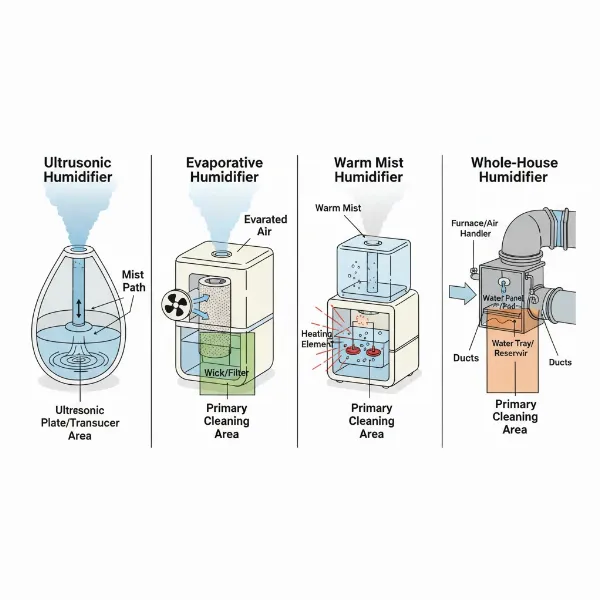 Illustration comparing four types of humidifiers and their specific cleaning challenges.
Essential Guide to Buying and Maintaining a Clean Humidifier
Preventing humidifier lung and other health issues starts with making informed choices and establishing a diligent maintenance routine. When selecting a humidifier, consider models designed for easy cleaning. Look for large tank openings, removable parts, and smooth internal surfaces that minimize crevices where mold and bacteria can hide.
The most crucial factor in reducing contamination and white dust is the type of water you use. Tap water, rich in minerals, is the primary culprit behind white dust and provides nutrients for microbial growth. Always opt for distilled water or demineralized water in your humidifier. This simple change can significantly reduce mineral buildup and inhibit the growth of bacteria and fungi, safeguarding both your health and your humidifier’s lifespan. Some humidifiers also offer demineralization cartridges or filters; use these if recommended by the manufacturer.
Beyond water quality, maintaining appropriate humidity levels is key. Excessive humidity (above 60%) can encourage the growth of mold, dust mites, and other allergens, even without a dirty humidifier. Use a hygrometer to monitor your indoor humidity and adjust your humidifier’s output accordingly to stay within the recommended 30-50% range.
When it comes to cleaning agents, avoid harsh chemicals like bleach, which can leave residues that are harmful when aerosolized. Instead, white vinegar and hydrogen peroxide are effective and safer alternatives for descaling and disinfecting. Regular replacement of filters and wicks is also paramount, as these components trap impurities and can become saturated with minerals and microbes over time.
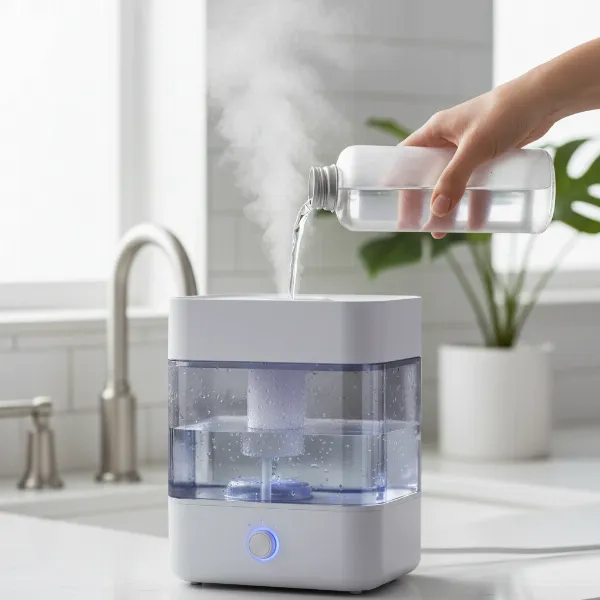 A person pouring distilled water into a sparkling clean humidifier.
Your Step-by-Step Humidifier Cleaning Routine
A consistent cleaning regimen is the best defense against the dangers of dirty humidifiers. Here’s a practical guide to keep your humidifier safe and effective:
Daily Maintenance: The Foundation of Clean Air
Make these simple steps a part of your daily routine whenever your humidifier is in use:
- Empty and Rinse: Each day, completely empty any remaining water from the tank and base. Do not reuse old water. Rinse the tank and base thoroughly with fresh water.
- Refill with Fresh Water: Always refill your humidifier with fresh, distilled water. This prevents stagnation and reduces mineral buildup.
Weekly Deep Cleaning: Essential for Health
At least once a week, perform a more thorough cleaning:
- Disassemble: Unplug the humidifier and carefully disassemble all removable parts (tank, base, cap, filters if applicable).
- Descaling (Mineral Removal):
- Fill the water tank and base with 1-2 cups of undiluted white vinegar. Swish the vinegar around to coat all surfaces.
- For stubborn mineral deposits, you can let the vinegar sit for 20-30 minutes. Use a soft brush (a bottle brush works well) to gently scrub away any scale or residue.
- Rinse all parts thoroughly with clean water until the vinegar smell is gone.
- Disinfecting (Germ Removal):
- After descaling, you can disinfect the humidifier. Some manufacturers recommend a dilute bleach solution (e.g., 1 teaspoon of bleach per gallon of water), but it’s generally safer to use a 3% hydrogen peroxide solution.
- Fill the tank and base with hydrogen peroxide, swish, and let it sit for about 30 minutes.
- Thoroughly rinse all parts with clean water multiple times to ensure no residue remains. Let parts air dry completely before reassembling.
- Filter/Wick Maintenance: If your humidifier uses a filter or wick, check it weekly.
- Rinse reusable filters under cool water to remove loose mineral deposits. Replace disposable filters according to manufacturer recommendations, typically every 1-3 months, or when they appear discolored or hardened.
- Wicks should also be rinsed and replaced regularly.
- External Cleaning: Wipe down the exterior of the humidifier with a damp cloth to remove any dust or residue.
Storage: Preparing for Off-Season
Before storing your humidifier for an extended period, perform a full deep clean as described above. Ensure all parts are completely dry to prevent mold and mildew growth during storage. Store it in a cool, dry place. Clean it again before using it after storage.
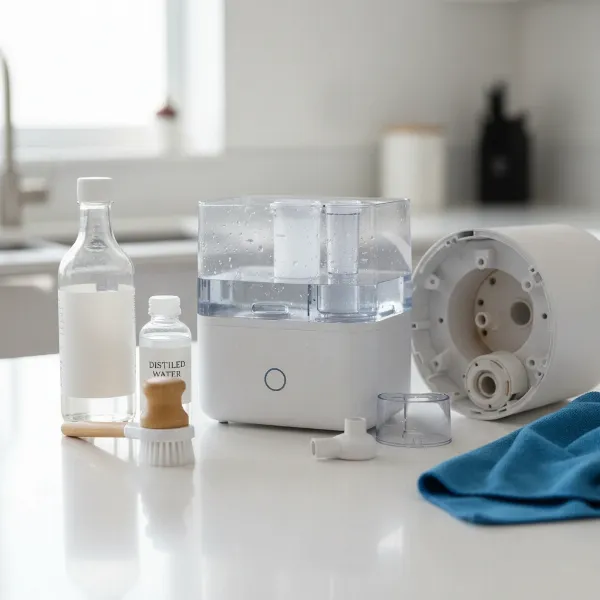 Cleaning supplies like white vinegar, soft brush, and distilled water next to a disassembled humidifier.
Conclusion
Humidifiers are invaluable tools for enhancing comfort and well-being, especially in dry environments. However, the critical message is clear: the benefits of these devices are entirely dependent on vigilant and consistent maintenance. The dangers of a dirty humidifier, ranging from the unsettling “white dust” to the serious inflammatory condition known as humidifier lung, underscore the importance of proper care. By understanding how these risks arise and committing to a routine of daily water changes, weekly deep cleaning with appropriate solutions, and using distilled water, you can ensure that your humidifier remains a source of healthy, breathable air rather than a hidden health hazard. Don’t let a simple oversight turn a helpful appliance into a source of illness. Prioritize cleanliness, and breathe easier.
What steps will you take today to ensure your humidifier is truly contributing to a healthier home?
Frequently Asked Questions
Can humidifier white dust harm my lungs?
Yes, the “white dust” produced by humidifiers using tap water consists of microscopic mineral particles. When inhaled, these particles can irritate the respiratory system, clog lung passages, and have been linked to lung injury, particularly in infants and individuals with pre-existing respiratory conditions. Using distilled water is crucial to prevent this.
How often should I clean my humidifier to prevent humidifier lung?
To prevent the growth of bacteria, fungi, and mold that can lead to humidifier lung, you should rinse and refill your humidifier’s water tank daily with fresh, distilled water. A more thorough deep cleaning and disinfection should be performed at least once a week, or more frequently if you notice any film or odor.
What are the main symptoms of humidifier lung?
Symptoms of humidifier lung (hypersensitivity pneumonitis) often resemble the flu and can include coughing, shortness of breath, fatigue, fever, and chest tightness. These symptoms typically appear several hours after exposure to contaminated humidifier mist. If you suspect humidifier lung, it is important to consult a doctor.
Can I use tap water in my humidifier if I have a filter?
While some humidifier filters can trap larger impurities, they often do not remove all the minerals found in tap water, which can still lead to “white dust.” Filters also do not prevent the growth of bacteria and fungi as effectively as using distilled water combined with regular cleaning. Distilled water is always the safest choice for health and appliance longevity.
What is the best way to clean a humidifier without using harsh chemicals?
For descaling, white vinegar is highly effective. Fill the tank with vinegar, let it sit for 20-30 minutes, then scrub and rinse thoroughly. For disinfection, a 3% hydrogen peroxide solution is a safer alternative to bleach. Fill the tank with hydrogen peroxide, let it sit for 30 minutes, then rinse multiple times until no residue or odor remains. Always ensure parts are completely dry before reassembling.